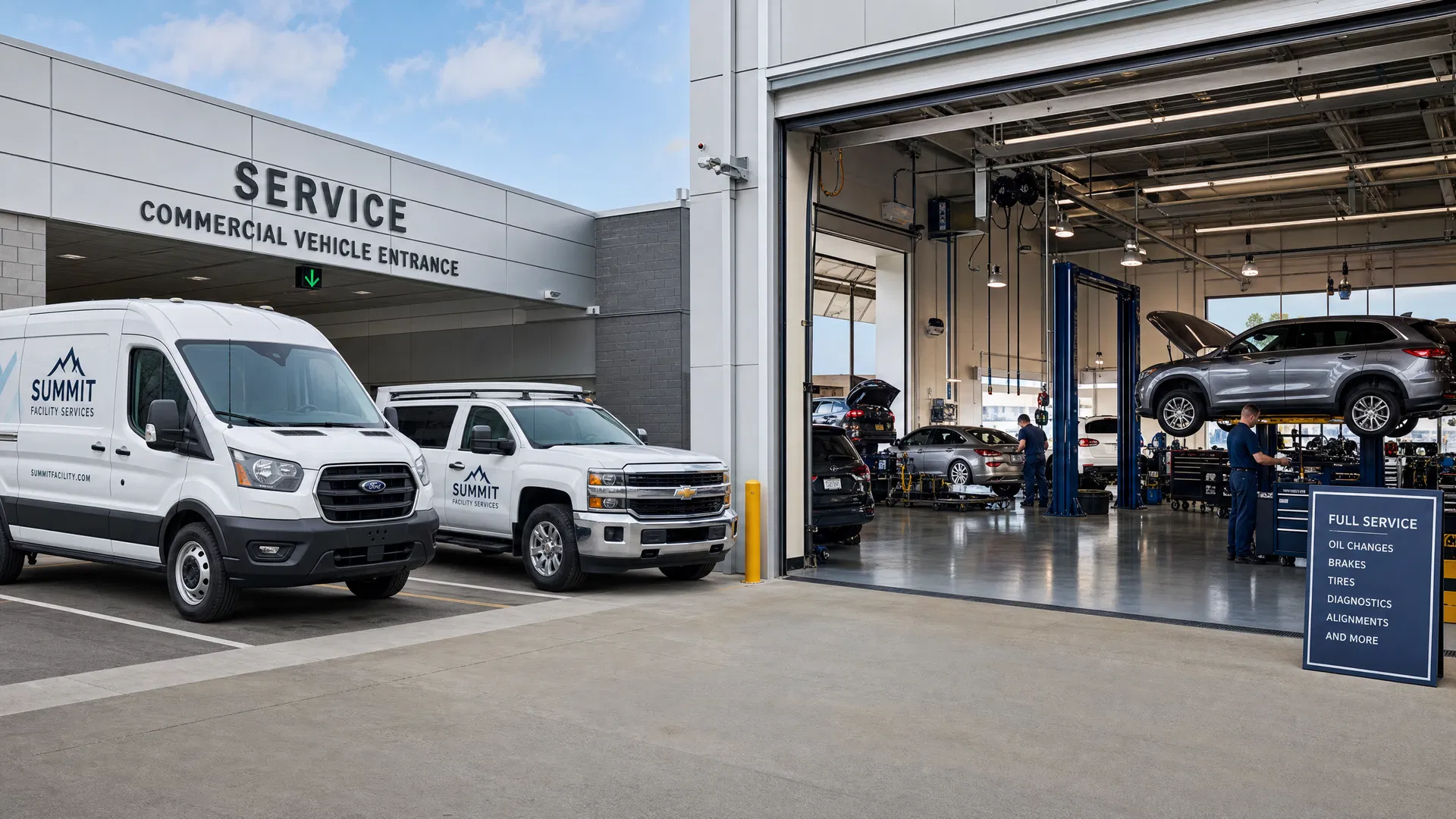
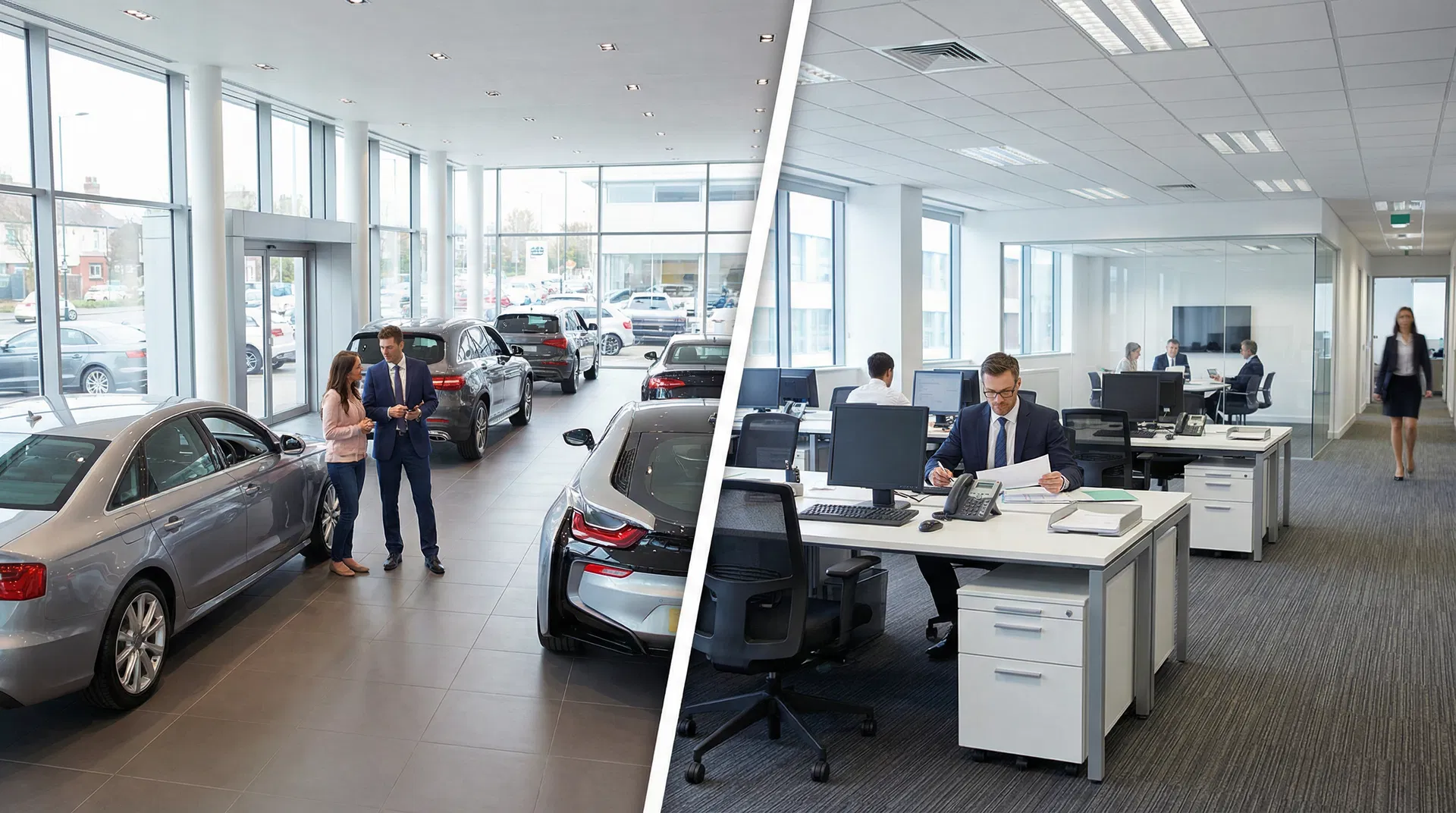
If you operate an auto dealership, repair shop, body shop, or towing company, you've likely been told you need "garage liability insurance." But you may also have been quoted "commercial auto insurance." Are they the same thing? Can you have one without the other? Do you need both? This guide breaks down the critical differences so you can make the right coverage decision for your business.
The Fundamental Difference
The core distinction is simple:
- Garage liability is designed specifically for businesses whose operations revolve around vehicles — selling them, repairing them, storing them, or servicing them. It's filed on the ISO Garage Coverage Form (CA 00 05) and combines auto liability with premises/operations liability into a single policy.
- Commercial auto is a standard business auto policy for any company that owns or operates vehicles for business purposes — regardless of industry. It's filed on the ISO Business Auto Coverage Form (CA 00 01) and covers liability and physical damage for scheduled vehicles.
Think of it this way: every auto dealer needs garage liability, but not every business that owns a truck needs garage liability. A plumber with a work van needs commercial auto. A used car dealer with 50 vehicles on the lot needs garage liability.
Side-by-Side Comparison
| Feature | Garage Liability | Commercial Auto |
|---|---|---|
| ISO Form | CA 00 05 (Garage) | CA 00 01 (Business Auto) |
| Designed for | Dealers, repair shops, body shops, tow companies, service stations | Any business that owns/leases vehicles |
| Auto liability | ✅ Covers owned, non-owned, and customer vehicles | ✅ Covers scheduled vehicles only |
| Premises liability | ✅ Built into the policy | ❌ Requires separate GL policy |
| Products/completed ops | ✅ Included (covers faulty repair claims) | ❌ Not included |
| Customer vehicles | ✅ Liability while in your care | ❌ Does not cover customer vehicles |
| Test drives | ✅ Specifically covered | ❌ Not designed for this |
| Physical damage (your vehicles) | ❌ Requires Dealers Open Lot add-on | ✅ Comp/collision on scheduled vehicles |
| Hired/non-owned auto | ✅ Automatically included | Requires symbol 8/9 selection |
| Typical cost | $3,000–$12,000/yr | $1,200–$3,000/yr per vehicle |
Who Needs Garage Liability?
You need garage liability if your business falls into any of these categories:
- Auto dealerships (new, used, wholesale, BHPH, online)
- Auto repair shops and service centers
- Body/collision shops
- Towing companies
- Auto detailing shops (that take custody of vehicles)
- Tire shops and quick-lube centers
- Motorcycle/RV/boat dealers
- Auto auction houses
- Parking garages (with valet/attendant parking)
The common thread: your business takes custody of, services, or sells vehicles as a primary operation.
Who Needs Commercial Auto?
You need commercial auto if your business owns vehicles for transportation purposes but does NOT operate a garage:
- Contractors (plumbers, electricians, HVAC)
- Delivery companies
- Landscaping companies
- Real estate agents (using personal vehicles for business)
- Sales representatives
- Any business with a fleet that isn't in the automotive service industry
When You Need BOTH Policies
Many automotive businesses need both garage liability AND a commercial auto policy. Here's when:
Scenario 1: Dealership with a delivery fleet
A used car dealer has 80 vehicles on the lot (covered by garage liability + dealers open lot) but also owns 3 delivery trucks and a courtesy shuttle van. The delivery trucks and shuttle need a separate commercial auto policy because they're not "garage operations" vehicles — they're business-use fleet vehicles.
Scenario 2: Repair shop with a parts runner
An auto repair shop has garage liability covering its operations, but also owns a pickup truck that employees use to pick up parts from suppliers. That truck should be on a commercial auto policy (or endorsed onto the garage policy as a specifically described auto).
Scenario 3: Tow company with non-tow vehicles
A towing company's tow trucks are covered under garage liability. But the owner's personal truck used for business meetings, and the office manager's company car, should be on a commercial auto policy.
Coverage Gaps to Watch For
The most dangerous situation is having the wrong policy — or assuming one policy covers everything. Common gaps:
- Dealer with only commercial auto. Commercial auto does NOT cover premises liability, products liability (faulty repairs), or customer vehicle operations. A slip-and-fall in your showroom? Not covered. A test-drive accident? Potentially not covered.
- Repair shop with only general liability. Standard GL excludes auto liability entirely. If a tech crashes a customer's car during a test drive after repair, GL won't pay.
- Garage liability without physical damage. Garage liability covers liability (what you owe others) but NOT physical damage to your own vehicles. You need Dealers Open Lot or commercial auto physical damage for that.
- Owned vehicles not scheduled anywhere. If you own a vehicle that's not listed on either your garage policy or a commercial auto policy, it may have zero coverage.
Cost Comparison: Which Is More Economical?
For automotive businesses, garage liability is almost always more cost-effective than trying to piece together equivalent coverage with separate policies:
| Coverage Approach | Estimated Annual Cost | What's Covered |
|---|---|---|
| Garage Liability (single policy) | $4,000–$8,000 | Auto liability + premises + products/completed ops + customer vehicles |
| Commercial Auto + General Liability (separate) | $5,000–$12,000 | Same coverage, but split across two policies with potential gaps |
The garage policy is purpose-built for your industry. It eliminates the coordination issues between separate auto and GL policies, and carriers that specialize in garage risks often offer better rates than generalist carriers.
How DealerLiability.com Helps
As an independent agency specializing in automotive businesses, we understand the nuances of garage liability vs. commercial auto better than generalist agents. We'll:
- Analyze your specific operations to determine which policy (or combination) you need
- Identify coverage gaps in your current program
- Compare eligible markets within our network of 100+ A-rated carriers to find the best rate for your risk profile
- Ensure your owned fleet, customer vehicles, and premises are all properly covered
Frequently Asked Questions
Can I have both garage liability and commercial auto insurance?
Is garage liability cheaper than commercial auto?
Does garage liability cover my owned vehicles?
Who needs commercial auto instead of garage liability?
Disclaimer: This article is provided for general informational purposes only and does not constitute legal, financial, or insurance advice, nor a recommendation of any specific carrier or product. Coverage availability, policy forms, and terms vary by carrier, state, and risk profile. ISO form references (CA 00 01, CA 00 05) are industry standards but individual carrier forms may differ. Always review your specific policy language and work with a licensed insurance agent to ensure adequate coverage. Information last verified July 2026. DealerLiability.com is a division of Ellie Insurance Group and is not a law firm.

Kevin A. Smith
Kevin specializes in commercial insurance for automotive businesses — dealers, repair shops, towing companies, and garages — across FL, TX, GA, NC, SC, OK, NM, and UT. He works with 100+ A-rated carriers to find the right coverage at the right price.
View all articles by Kevin