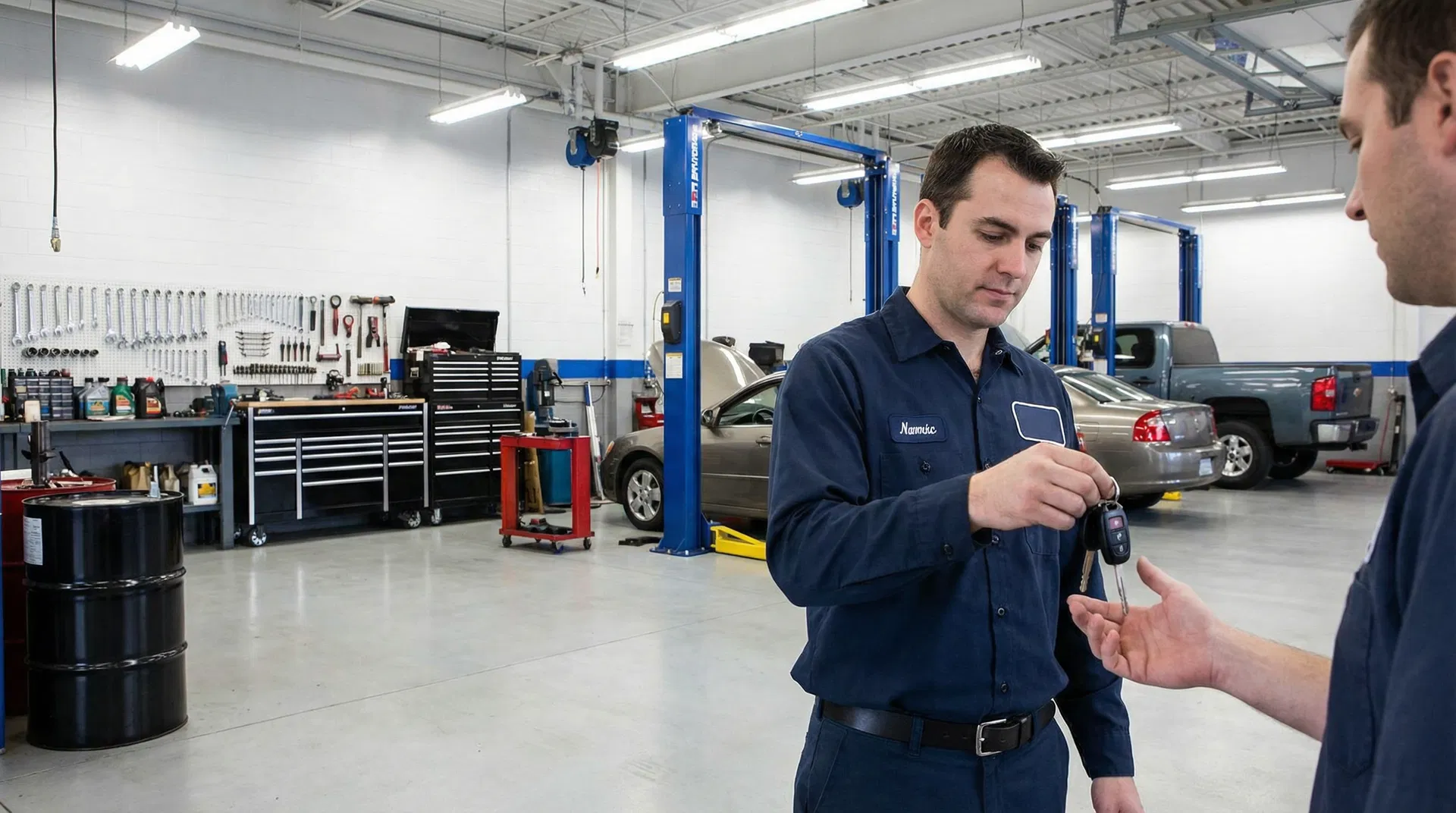
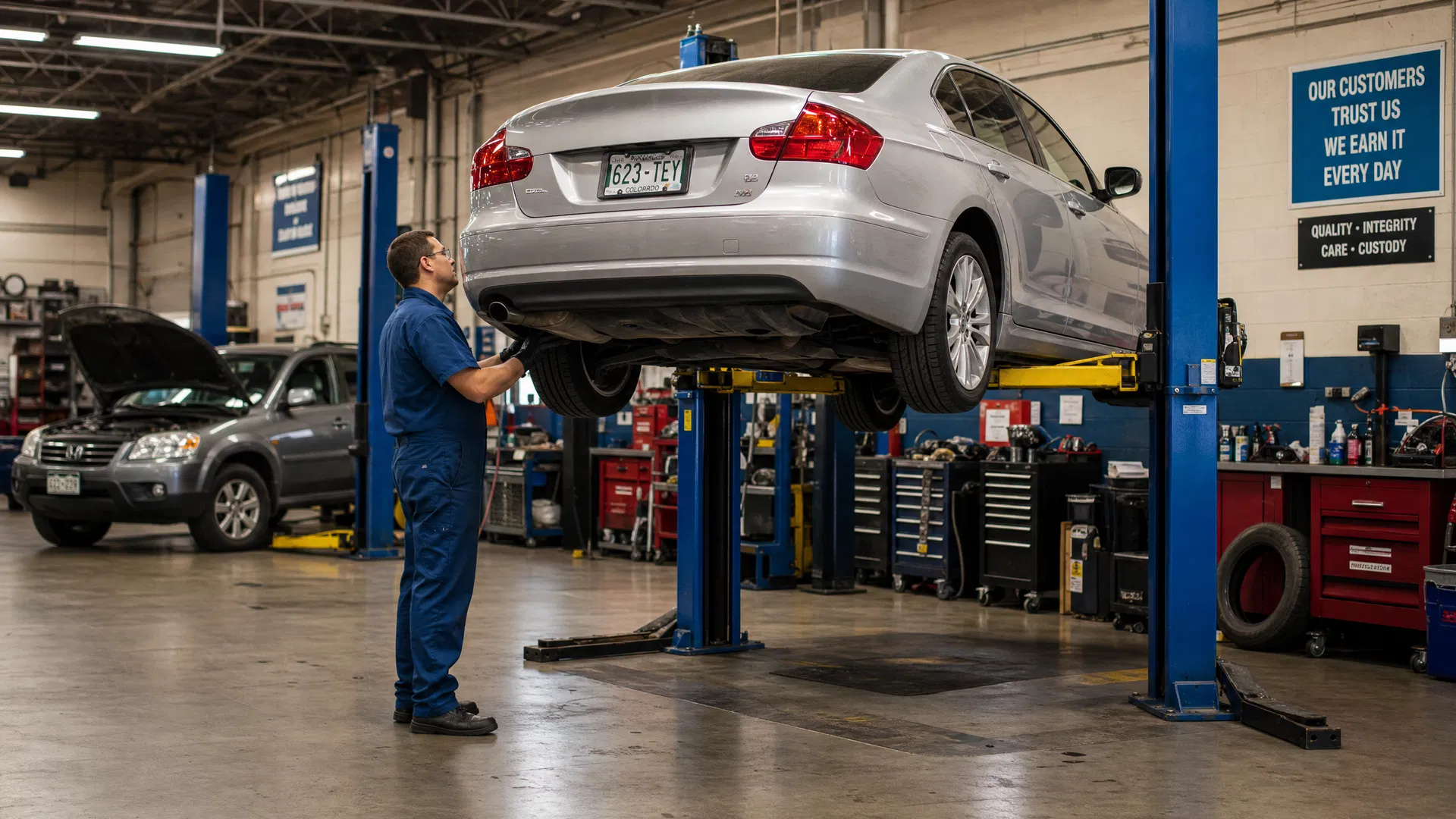
Garagekeepers insurance is one of the most misunderstood — and most essential — coverages for any business that takes custody of customer vehicles. Whether you're an auto repair shop, body shop, dealership service department, or towing company, this coverage protects you when a customer's car is damaged, stolen, or destroyed while in your care. But how much does it actually cost in 2026?
Average Garagekeepers Insurance Cost by Business Type
Garagekeepers premiums vary significantly based on your operation type, the number of vehicles you handle, and the coverage form you select. Here's what businesses are paying in 2026:
| Business Type | Annual Premium Range | Typical Limit | Key Factor |
|---|---|---|---|
| Small auto repair shop (1–3 bays) | $458–$1,000 | $50,000–$100,000 | Low vehicle count |
| Mid-size repair/body shop (4–8 bays) | $1,000–$1,800 | $100,000–$250,000 | Higher throughput |
| Dealership service department | $1,500–$3,500 | $250,000–$500,000 | Higher-value vehicles |
| Towing company (storage yard) | $1,200–$2,500 | $100,000–$250,000 | Outdoor exposure |
| Body/collision shop | $1,300–$2,800 | $150,000–$300,000 | Extended custody time |
| High-end/luxury shop | $2,500–$5,000+ | $500,000+ | Vehicle values |
Source: Aggregate data from Insureon (2025 median: $458/yr for small shops), The Hartford ($810–$1,687/yr), PIA Insurance Agency ($1,000–$1,300 typical), and Progressive Commercial. Ranges reflect 2025–2026 market rates across multiple carriers.
Three Types of Garagekeepers Coverage (and How They Affect Cost)
The single biggest factor in your garagekeepers premium is the coverage form you select. There are three distinct types, and they differ dramatically in both protection level and cost:
1. Garagekeepers Legal Liability (GLL) — Cheapest
This is the most common and most affordable form. It only pays when your business is legally liable for the damage — meaning your employee or operation caused the loss. If a tree falls on a customer's car in your lot and you weren't negligent, legal liability won't cover it.
- Cost: Baseline pricing — this is what most "average cost" figures reflect
- Best for: Budget-conscious shops with low-risk indoor storage
- Risk: Customer must prove your fault, which can lead to disputes and lawsuits
2. Direct Excess — Middle Ground
Direct excess pays regardless of fault, but only after the customer's own auto insurance pays first. If the customer has no insurance or their policy doesn't cover the loss, your garagekeepers policy steps in as primary.
- Cost: Typically 15–30% more than legal liability
- Best for: Shops that want broader protection without the full cost of direct primary
- Risk: Still depends partly on customer having their own coverage
3. Direct Primary — Most Expensive, Best Protection
Direct primary pays first, regardless of fault and regardless of the customer's own insurance. This is the gold standard — it eliminates finger-pointing and protects your reputation.
- Cost: 40–60% more than legal liability
- Best for: High-volume shops, luxury service centers, and businesses that prioritize customer relationships
- Risk: Higher premium, but virtually eliminates coverage disputes
What Factors Determine Your Garagekeepers Premium?
Insurance carriers evaluate several risk factors when pricing your garagekeepers coverage:
Maximum vehicles in your care at any time
This is the #1 rating factor. A shop that holds 5 vehicles overnight is a fundamentally different risk than one holding 50. Carriers want to know your maximum capacity, not your average — because that's the worst-case exposure.
Location and crime rate
A shop in a high-theft ZIP code pays more than one in a rural area. Urban locations with outdoor storage face the highest premiums. Florida shops in hurricane zones also pay more due to weather exposure.
Indoor vs. outdoor storage
Vehicles stored inside a locked building are significantly cheaper to insure than those parked in an open lot. If you can move customer vehicles indoors overnight, you may save 15–25% on your premium.
Security measures
Cameras, fencing, lighting, alarm systems, and key lockboxes all reduce your premium. Some carriers offer explicit discounts (5–15%) for documented security protocols.
Claims history
Like all insurance, your loss history matters. A shop with zero garagekeepers claims in the past 3–5 years will pay substantially less than one with multiple paid claims.
Coverage limits and deductibles
Higher limits cost more. Higher deductibles cost less. The standard per-vehicle deductible is $500, but you can often choose $1,000 or $2,500 to reduce your premium by 10–20%.
Garagekeepers Cost by State
Location matters. Here's how garagekeepers premiums compare across the states where DealerLiability.com operates:
| State | Typical Annual Range | Key Factor |
|---|---|---|
| Florida | $1,200–$2,800 | Hurricane exposure, high theft rates in metro areas |
| Texas | $1,000–$2,500 | Hail/storm exposure, large lot sizes |
| North Carolina | $800–$2,000 | Moderate risk profile, competitive market |
| South Carolina | $800–$1,800 | Similar to NC, slightly lower vehicle values |
| Georgia | $900–$2,200 | Atlanta metro drives higher rates |
| Oklahoma | $900–$2,400 | Severe weather (tornadoes, hail) increases exposure |
How to Reduce Your Garagekeepers Insurance Cost
- Increase your deductible. Moving from $500 to $1,000 per vehicle can save 10–15% annually.
- Install security systems. Cameras, fencing, and alarm systems demonstrate risk mitigation to carriers.
- Store vehicles indoors. Even partial indoor storage (overnight) reduces exposure.
- Bundle with garage liability. Most carriers offer 10–20% multi-policy discounts when you bundle garagekeepers with your garage liability policy.
- Maintain a clean claims history. Three claim-free years can reduce your premium by 15–25% at renewal.
- Shop multiple carriers. Garagekeepers pricing varies widely between carriers. An independent agent with access to 100+ A-rated carriers (like DealerLiability.com) can find the best rate for your specific risk profile.
- Right-size your limits. Don't over-insure. If the most expensive vehicle you service is worth $40,000, you don't need a $500,000 per-vehicle limit.
Do You Need Garagekeepers Insurance?
If you take physical custody of customer vehicles for any reason — repair, storage, service, towing, or parking — you need garagekeepers insurance. Your garage liability policy does not cover damage to customer vehicles in your care. These are two separate coverages that work together:
- Garage liability = covers injuries and property damage you cause to others (third-party claims)
- Garagekeepers = covers damage to customer vehicles while in your custody (first-party property)
Without garagekeepers coverage, a single fire, flood, or theft event could leave you personally liable for hundreds of thousands of dollars in customer vehicle damage. For a deeper comparison, see our guide: Garagekeepers vs. Garage Liability — What's the Difference?
Get a Garagekeepers Insurance Quote
DealerLiability.com has access to 100+ A-rated carriers and compares eligible markets to find the best garagekeepers rate for your specific business. Whether you need basic legal liability or full direct primary coverage, we'll compare options and get you quoted in minutes — not days.
Get your instant garagekeepers quote →
Frequently Asked Questions
What is the average cost of garagekeepers insurance?
Is garagekeepers legal liability cheaper than direct primary?
Does garagekeepers insurance cover theft of customer vehicles?
How much garagekeepers coverage do I need?
Disclaimer: This article is provided for general informational purposes only and does not constitute legal, financial, or insurance advice, nor a recommendation of any specific carrier or product. Coverage availability, pricing, and policy terms vary by state, carrier, and risk profile and are subject to change. Cost ranges shown are illustrative estimates based on aggregated industry data, not binding quotes. Always work with a licensed insurance agent to obtain accurate pricing for your specific business. Information last verified July 2026. DealerLiability.com is a division of Ellie Insurance Group and is not a law firm.

Kevin A. Smith
Kevin specializes in commercial insurance for automotive businesses — dealers, repair shops, towing companies, and garages — across FL, TX, GA, NC, SC, OK, NM, and UT. He works with 100+ A-rated carriers to find the right coverage at the right price.
View all articles by Kevin