Workers' compensation insurance is one of the most overlooked — and most important — coverages for auto dealers. Many small dealers assume they don't need it because they only have a few employees, or because their state has an exemption for small businesses. But a single employee injury can result in medical bills, lost wages, and legal costs that can threaten the financial stability of your dealership.
Why Auto Dealers Need Workers' Comp
Auto dealerships involve physical work that creates real injury risk for employees:
Need a quote? Get an instant garage liability quote here — most businesses are quoted in under 60 seconds with same-day certificates available.
- Lot attendants: Moving vehicles in tight spaces, exposure to traffic, slip-and-fall risks in all weather
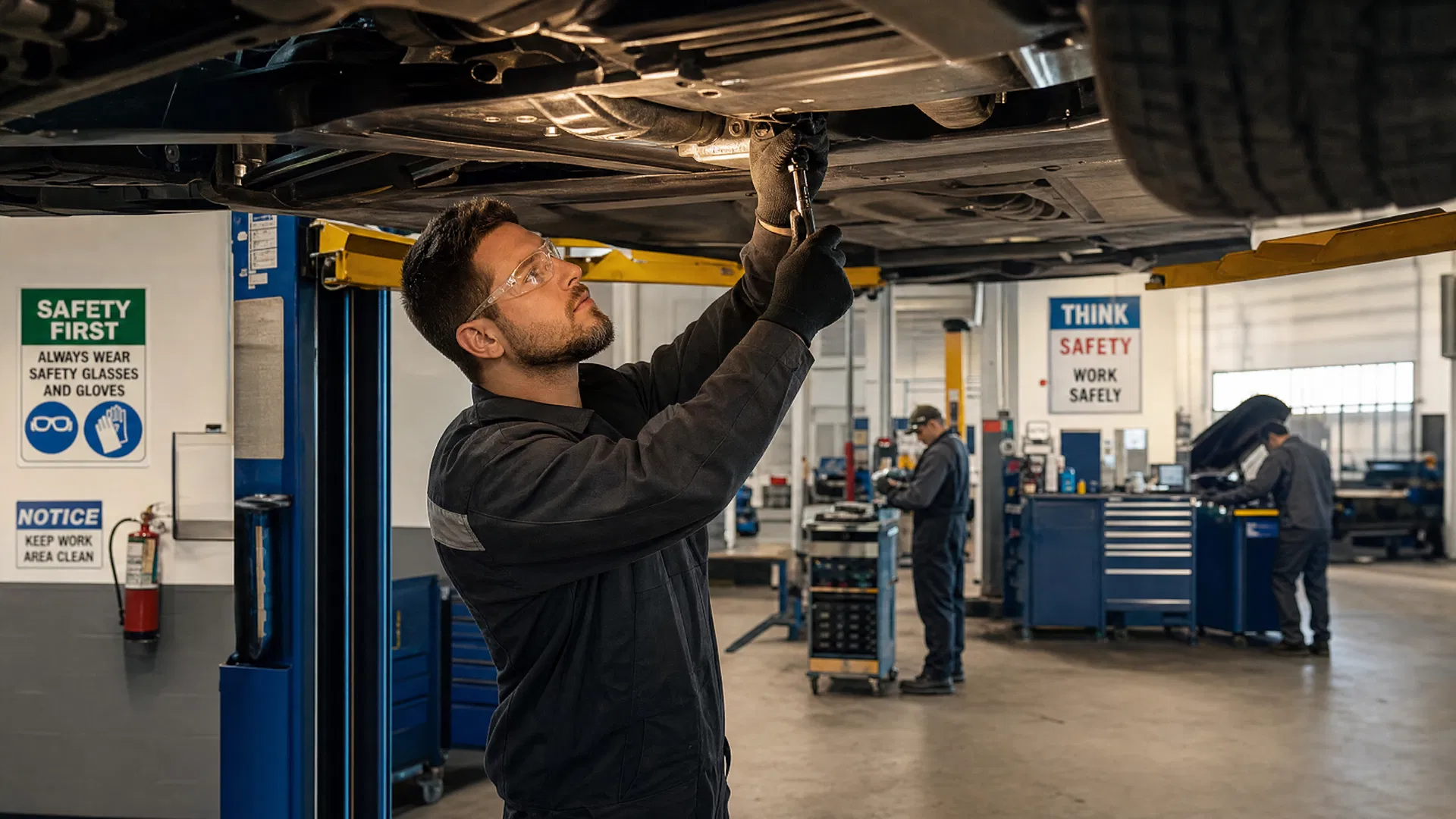
- Service technicians: Working under lifts, handling heavy parts, exposure to chemicals and heat
- Detail staff: Repetitive motion injuries, chemical exposure, working in confined spaces
- Sales staff: Test drive accidents, slip-and-fall on the lot
- Office staff: Repetitive strain injuries, trip-and-fall
Even a "desk job" dealership employee can be injured on the premises. Workers' comp covers medical expenses and lost wages regardless of who was at fault for the injury.
When Is Workers' Comp Required?
Requirements vary by state. Here are the key thresholds for the states we serve:
| State | Required When | Penalty for Non-Compliance |
|---|---|---|
| Florida | 4+ employees (automotive) | $1,000/day fine + stop-work order |
| Texas | Not required (voluntary) | N/A — but loss of legal protections |
| Georgia | 3+ employees | Misdemeanor + $10K fine per violation |
| North Carolina | 3+ employees | Misdemeanor + $1/day per employee fine |
| South Carolina | 4+ employees | Misdemeanor + fine up to $100/day |
| Oklahoma | All employers (few exceptions) | $1,000 fine + personal liability |
Even in states where workers' comp is not legally required (like Texas), most dealers carry it voluntarily because the alternative — being personally liable for all employee injury costs — is far more expensive than the premium.
What Workers' Comp Covers
Workers' compensation provides four main benefits to injured employees:
- Medical expenses: All reasonable and necessary medical treatment related to the work injury — doctor visits, surgery, physical therapy, prescriptions
- Lost wages: Typically 66.67% of the employee's average weekly wage during recovery (varies by state)
- Disability benefits: Payments for permanent impairment if the employee doesn't fully recover
- Death benefits: Payments to dependents if an employee dies from a work injury
In exchange for these guaranteed benefits, employees generally cannot sue the employer for workplace injuries (this is called the "exclusive remedy" doctrine). This protects the dealer from potentially larger jury awards.
Common Workers' Comp Claims at Dealerships
| Claim Type | Department | Typical Cost |
|---|---|---|
| Back injury from lifting | Service / Detail | $15,000–$75,000 |
| Slip and fall on wet lot | Sales / Lot | $5,000–$30,000 |
| Vehicle falls off lift | Service | $20,000–$100,000+ |
| Chemical burn or exposure | Detail / Body Shop | $5,000–$25,000 |
| Struck by vehicle on lot | Lot Attendant | $25,000–$200,000+ |
| Repetitive motion (carpal tunnel) | Office / Detail | $10,000–$40,000 |
| Eye injury from debris | Service / Body | $5,000–$50,000 |
How Much Does Workers' Comp Cost for Auto Dealers?
Workers' comp premiums are calculated based on payroll × rate per $100. The rate depends on the class code assigned to each employee's job function:
| Class Code | Description | Typical Rate (per $100 payroll) |
|---|---|---|
| 8748 | Auto Dealer — Sales/Clerical | $0.50–$1.50 |
| 8380 | Auto Repair / Service Center | $2.50–$5.00 |
| 8380 | Auto Dealer — Lot Attendants | $3.00–$6.00 |
| 7219 | Tow Truck / Trucking NOC | $5.00–$12.00 |
Example: A used car dealer in Florida with $200,000 in total annual payroll (2 salespeople + 1 lot attendant + 1 admin) might pay approximately $2,500–$5,000/year for workers' comp.
How to Reduce Workers' Comp Costs
- Safety programs: Implement and document regular safety training. Many carriers offer premium credits for formal safety programs.
- Return-to-work programs: Getting injured employees back to light duty quickly reduces claim costs and premiums.
- Accurate class codes: Ensure employees are classified correctly. Salespeople should not be rated at mechanic rates.
- Experience modification rate (EMR): Maintain a clean claims history to keep your EMR below 1.0, which reduces premiums.
- Pay-as-you-go: Many carriers offer monthly premium payments based on actual payroll, improving cash flow.
- Shop the market: Workers' comp rates vary between carriers. An independent agent can compare options.
What Happens Without Workers' Comp?
If you're required to carry workers' comp and don't, the consequences are severe:
- Florida: Stop-work order (business shut down) + $1,000/day fine + personal liability for all injury costs
- Georgia: Criminal misdemeanor + $10,000 fine per violation + personal liability
- Most states: You lose the "exclusive remedy" protection, meaning injured employees can sue you in court for unlimited damages
The cost of non-compliance far exceeds the cost of the coverage itself.
Getting Workers' Comp for Your Dealership
Workers' comp for auto dealers is best placed through an agent who understands automotive class codes and can ensure your employees are properly classified. Misclassification — putting lot attendants in a clerical class code, for example — can result in audit penalties and retroactive premium charges.
At DealerLiability.com, we place workers' compensation for auto dealers, repair shops, and towing companies across all the states we serve. We ensure proper classification, competitive rates, and seamless coordination with your other garage coverages. Get a free workers' comp quote for your dealership.
Disclaimer: Workers' compensation requirements, rates, and class codes described in this article are general in nature and based on publicly available information as of 2026. Actual requirements, rates, and classifications vary by state, carrier, and individual business factors. Always verify current requirements with your state's workers' compensation regulatory agency and consult with a licensed insurance agent. This article does not constitute legal or insurance advice.

Kevin A. Smith
Kevin specializes in commercial insurance for automotive businesses — dealers, repair shops, towing companies, and garages — across FL, TX, GA, NC, SC, OK, NM, and UT. He works with 100+ A-rated carriers to find the right coverage at the right price.
View all articles by Kevin