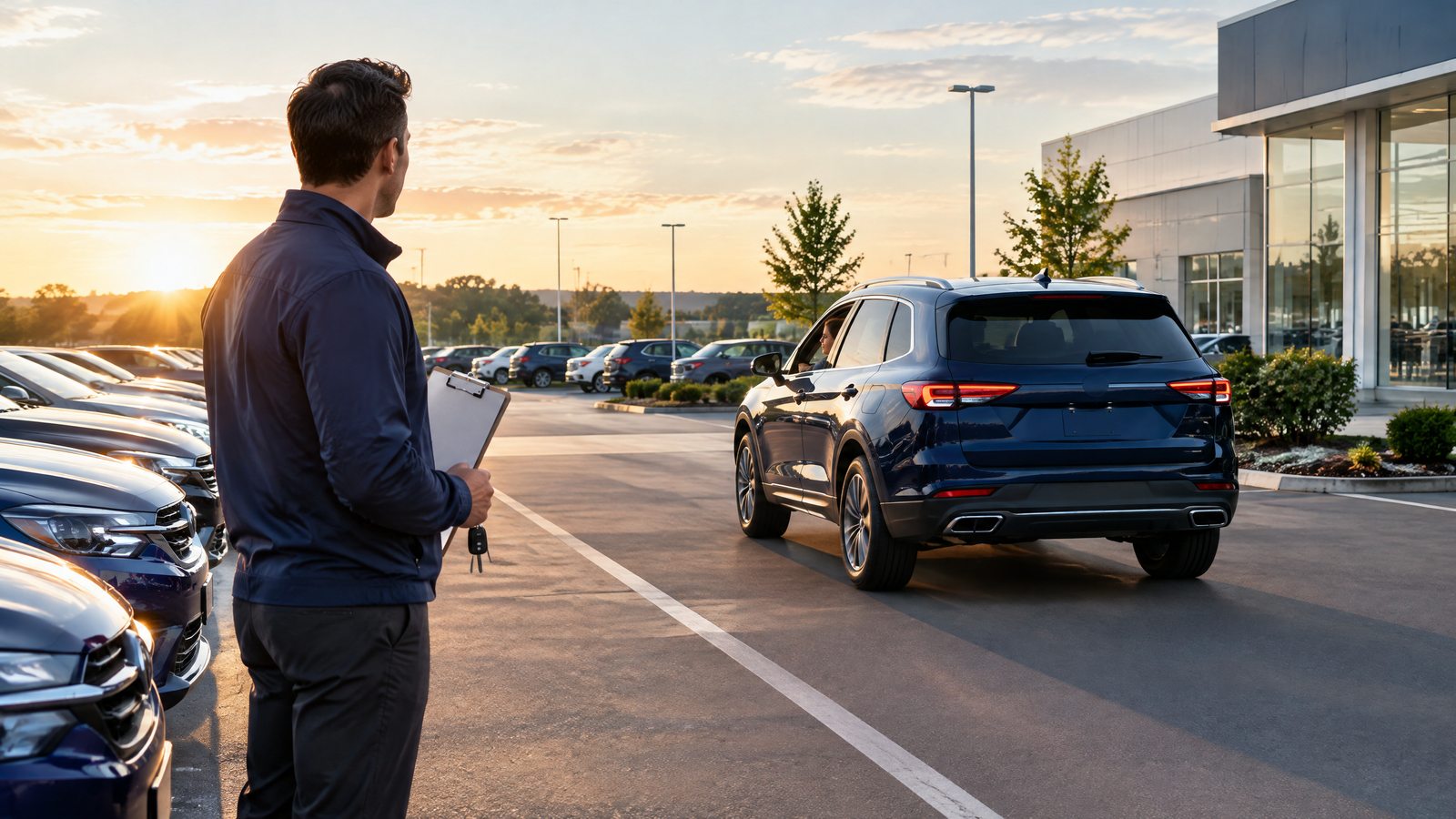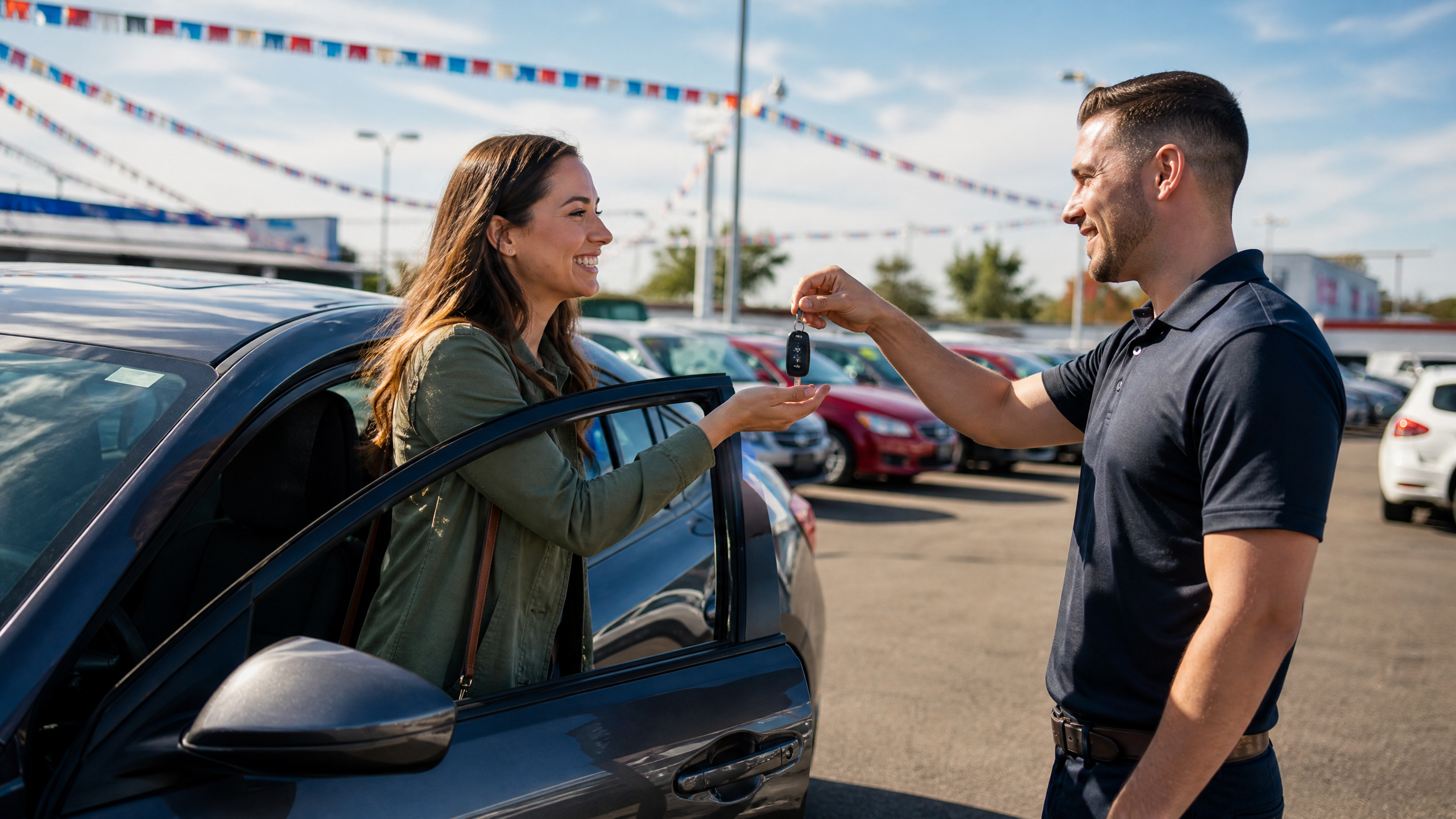
A used-car dealership can lose a vehicle without a broken fence, a forced door, or a stolen key. A customer presents convincing identification. A payment appears legitimate. Your team completes the paperwork and hands over the vehicle. Days later, the bank, lender, or rightful owner reveals the transaction was fraudulent.
That is why false pretense coverage for auto dealers deserves its own place in your insurance review. The important question is not simply whether your inventory policy includes theft. It is whether your policy addresses a vehicle you voluntarily released because someone deceived you—or a vehicle you acquired from a seller who did not have legal title. IRMI identifies both situations in its explanation of false-pretense protection.[1]
For an independent dealer, the goal is straightforward: protect the value of your inventory, keep legitimate deals moving, and avoid paying for a policy that misses the way your business actually operates. This guide explains what to look for, which losses belong elsewhere, and how to strengthen the decision you make before the keys leave.
What is false pretense coverage for auto dealers?
False pretense coverage is insurance protection designed for certain fraudulent vehicle transactions. It is commonly provided through an endorsement—a policy addition that changes the underlying coverage. You may also hear the exposure described as voluntary parting, trick and device, or fraudulent vehicle release. Those phrases describe the problem, but they are not a substitute for reading the actual coverage wording.
There are two important sides to the exposure. On the selling side, someone uses deception to persuade your dealership to give up a covered vehicle. On the buying side, your dealership acquires a vehicle from someone who lacks legal title. IRMI explains that a false-pretense endorsement can address both fraudulent taking and acquisition without legal title. The vehicles and transactions included in your particular policy still control.[1]
Think of the endorsement as a targeted part of your inventory protection, not an all-purpose promise to reimburse every dishonest transaction. A fraudulent vehicle delivery, an unpaid installment loan, a wiring mistake, and a customer complaint can all involve money, but they do not necessarily involve the same insurance.
The label on a quote is only the starting point. Ask where the endorsement appears in the policy, what vehicle losses it describes, and whether the protection applies to both vehicles leaving your lot and vehicles entering your inventory. Keep the answer connected to your actual business: private-party acquisitions, wholesale purchases, remote retail sales, demonstrations, and financed deliveries.
This is especially useful when you compare policies. Two programs can carry similar inventory limits and competitive premiums while handling deceptive transactions differently. A proper comparison looks at the fraud protection alongside your dealers open lot coverage, not after a vehicle disappears.
Why ordinary theft coverage may not be enough
Dealers open lot insurance protects dealer inventory against covered physical-damage losses. Programs commonly address exposures such as theft, vandalism, and weather damage. Victor describes those risks in its dealer open lot program. That does not establish that every transaction involving a missing vehicle qualifies as covered theft.[7]
The distinction is how your dealership lost possession. Someone who breaks into a secured lot and takes a vehicle did not receive your permission. Someone who obtains a vehicle through convincing deception may have received the keys from your employee. That voluntary release is the reason a false-pretense exclusion or endorsement matters.
IRMI describes a physical-damage exclusion for fraudulent acts and gives examples involving a supposed test drive or fraudulent delivery instructions. Sentry also uses the example of a customer who receives permission for a demonstration and never returns, explaining why the loss may not be treated the same way as ordinary theft.[1] [5]
The point is not that every missing test-drive vehicle is automatically excluded. The facts and issued policy need to be reviewed. The point is that the word “theft” on an insurance summary is not a complete answer to a deceptive-release exposure.
Garage liability serves another purpose: it addresses covered liability claims against the dealership, rather than functioning as a blanket reimbursement plan for your own inventory losses. Likewise, protection for customer vehicles in your custody should not be confused with protection for vehicles you own for sale. Keep these coverage roles separate when discussing the loss.
If your present review consists of checking the total inventory limit and asking whether theft is included, add one more question: “What happens when my employee willingly releases the vehicle because the transaction looks legitimate?” That single question can reveal a meaningful difference between competing policies. For broader background, read our dealers open lot insurance guide. If you allow solo demonstrations, pair this fraud review with our unaccompanied test-drive controls guide.
Four fraud situations worth discussing before a claim
The following examples are hypothetical. They illustrate which policy questions to ask; they are not predictions of a claim outcome.
A counterfeit cashier’s check
A buyer pays for an inventory vehicle with what appears to be a cashier’s check. Your team sees funds in the account and delivers the unit. The bank later identifies the instrument as counterfeit.
The FTC warns that fake checks can resemble genuine cashier’s checks and that deposited funds may become available before the bank discovers the fraud. A visible balance is not proof that a check is legitimate.[3] For insurance, ask whether the deceptive release of the vehicle is included in your false-pretense protection. If your team also refunded an alleged overpayment, discuss that separate money loss rather than assuming it follows the same coverage.
A buyer using a stolen or synthetic identity
A transaction arrives with believable identification and a strong-looking finance application. The dealership releases the vehicle, then discovers the person used someone else’s identity or a fabricated identity. Marsh McLennan Agency describes both stolen and synthetic identities as methods used in dealership false-pretense schemes.[2]
The coverage review needs to identify the actual loss and whose financial interest is involved. A lender’s loss, a dealer’s retained exposure, and a vehicle still owned by the dealer are not automatically identical. Lender approval is a useful business step, but it does not replace authenticating the person collecting your vehicle.
A vehicle acquired without valid ownership
Your dealership buys a wholesale unit or accepts a trade. The seller appears to have the necessary paperwork, but later the rightful owner establishes that the seller did not have legal title. IRMI includes acquisition from someone without legal title in its description of false-pretense coverage.[1]
Do not treat every paperwork delay or disclosed salvage title as the same problem. The concern here is deceptive acquisition and the seller’s legal authority to transfer ownership. Routine clerical errors, known title conditions, and disputes over contract performance require their own review.
Payment instructions redirected by email
A legitimate purchase becomes a money-loss event when a convincing email changes the beneficiary account and your employee sends funds to a fraudster. This is a different question from a fraudster collecting your inventory. Marsh discusses automotive phishing and social-engineering losses, including fraudulent instructions affecting payments.[6]
Review crime, social-engineering, funds-transfer, and cyber wording with your insurance professional. Do not assume that a false-pretense vehicle endorsement protects every dollar transferred through a fraudulent email.
What to check in the actual endorsement
Start with the policy form and schedule, not the certificate of insurance. A certificate is useful evidence that a policy exists; it is not the complete explanation of which fraudulent transactions are insured.
Which vehicles and transactions qualify?
Ask whether the protection applies to dealer-owned inventory, recently acquired vehicles, consigned units, or other categories relevant to your business. Then discuss the actual handoff: a test drive, completed retail delivery, remote pickup, third-party transport, or wholesale transaction. Avoid substituting a general description of your dealership for a clear example of how a vehicle changes hands.
Confirm whether deceptive acquisition is included as well as deceptive release. If you regularly buy from private sellers or unfamiliar wholesalers, the acquisition question matters just as much as the delivery question. IRMI’s description identifies both, but your issued endorsement must provide the protection you are relying on.[1]
What financial limit applies?
Find the specific false-pretense limit. Ask whether it operates per vehicle, per loss, or within another policy limit, and whether an annual aggregate applies. Also identify the deductible and how losses involving multiple vehicles would be handled. These are questions to resolve from the contract, not assumptions to make from the total open-lot limit.
What conditions do you have to follow?
Read the reporting requirements, notice deadlines, cooperation duties, and any transaction-verification conditions in your policy. Do not assume that completing the checklist in this article guarantees coverage. A practical procedure helps protect the business, while the contract sets the requirements for insurance.
What valuation applies?
Ask how an insured vehicle loss would be valued and which interests are included. Your purchase cost, reconditioning expense, asking price, financing balance, and expected gross profit are different figures. A policy does not necessarily reimburse all of them.
Bring your most expensive units and most common transaction types into the discussion. That gives you a clearer comparison than asking only for the lowest premium. The result should be a dealer insurance program that aligns with the value and release process you actually need to protect.
Limits and cost: compare the exposure, not just the price
There is no useful universal price for false pretense insurance. It is often evaluated as part of a broader dealer program, and the premium reflects the insurer’s view of the operation and selected protection. Quoting a single nationwide price without a dealership profile would create false precision.
For a meaningful comparison, be ready to explain your inventory values, how often you buy from the public, whether you permit unaccompanied demonstrations, and whether you deliver vehicles remotely. Your history of vehicle fraud and your verification procedures help describe the exposure. Marsh emphasizes reviewing transaction details and false-pretense practices; Sentry recommends written sales procedures and management accountability.[2] [5]
The limit needs special attention when your inventory mix changes. Suppose your dealership normally stocks lower-priced sedans but adds a few more expensive trucks or SUVs. A fraud sublimit selected around the old inventory may no longer match the larger units. This is a planning concern, not a prediction of the amount an insurer would pay.
Consider accumulation as well. If one fraudulent buyer or intermediary obtains multiple vehicles, review how the policy would define the loss and apply its limits. Do not assume that the stated amount resets for every VIN or that a large overall inventory limit automatically solves the problem.
Competitive pricing matters. The better goal is competitive pricing for comparable protection. Ask your agent to explain the differences in false-pretense wording, valuation, deductibles, and limits before choosing between quotes. Raising a deductible may reduce premium in some programs, but a lower price is only useful if your business can comfortably absorb its retained share.
For your quote, have your current policy available and describe the transactions you want protected in plain English. “We release vehicles to remote buyers after finance approval” is more useful than “we need full coverage.” Compare dealer insurance options with the fraud exposure included in the conversation.
A stronger vehicle-release checklist
The most useful fraud control is a documented pause before possession changes. Sentry recommends a written sales policy with management review and controls around payment, demonstrations, and trade ownership. Marsh similarly emphasizes verification and staff training rather than rushing to hand over the keys.[2] [5]
Verify the person and the transaction together
Check the buyer’s identity and authority to act. Then compare the buyer, payer, borrower, and person collecting the vehicle. A different recipient can have a legitimate explanation, but an unexplained mismatch deserves review before delivery. Use the same consistent standards for every customer rather than profiling people by appearance or background.
Give payment verification its own approval
Do not make vehicle release depend solely on the salesperson’s belief that the payment looks good. Use a procedure developed with your bank for verifying the payment method and deciding when delivery is appropriate. Independently obtain the bank’s contact information rather than relying on a number printed on a suspicious check or supplied in an unexpected message.
There is no universal waiting period in this guide that makes every check safe. The FTC notes that counterfeit checks can take weeks to be discovered. An available balance should not be confused with a final assurance that the payment is genuine.[3]
Treat exceptions as exceptions
A late pickup, remote delivery, third-party transport, financing change, or request to skip a normal check should trigger a second approval. Document who approved the exception and why. Staff should have permission to pause a suspicious transaction without being pressured to sacrifice the process for a sale.
Keep demonstration and release records
Record the VIN, person in possession, time out, expected return, and required documentation. Follow current state requirements for dealer plates and demonstrations. The insurance distinction between a test-drive liability accident and a deceptive vehicle disappearance makes it worth reviewing both procedures; our test-drive liability guide addresses the road-risk side.
Store customer information securely and retain only what your approved process requires. More copies of personal documents do not automatically mean better protection. The objective is a reliable verification record, not an uncontrolled collection of sensitive data.
Protect the buying side of your inventory
False-pretense risk does not start only when a retail customer arrives. It can enter the business through a trade-in, private-party purchase, unfamiliar wholesaler, or vehicle offered by a supposed representative of the owner.
Match the physical vehicle to the paperwork. Investigate VIN discrepancies instead of assuming a typographical error. Confirm the seller’s identity and authority to transfer the vehicle, and understand the state-specific title process before advancing money. Where liens are involved, verify payoff instructions and the release process through independently trusted contact channels.
A vehicle-history report is useful, but it is not a complete ownership guarantee. The Department of Justice’s National Motor Vehicle Title Information System, or NMVTIS, provides title-related information, reported odometer readings, brand history, and salvage or total-loss information. Its official guidance also explains that state standards and reporting practices differ.[4]
Use that report as one part of the review. Do not assume a favorable history report establishes that the person in front of you is the rightful seller, every lien has been satisfied, or the vehicle has no mechanical problems. Obtain the appropriate title records and clarify unresolved ownership questions before paying.
Be equally careful with a familiar source when the instructions change. A trusted seller’s usual bank account suddenly being replaced by a new account is a reason for independent confirmation. It does not become safe simply because you have done business before.
Build the same disciplined process for all acquisition channels. The details may differ between auction purchases and public trade-ins, but the decision remains the same: who has the right to sell this vehicle, what evidence supports that right, and where is the money going? Those are operating controls; they also make your insurance conversation more specific.
BHPH dealers: fraud protection is not loan-default insurance
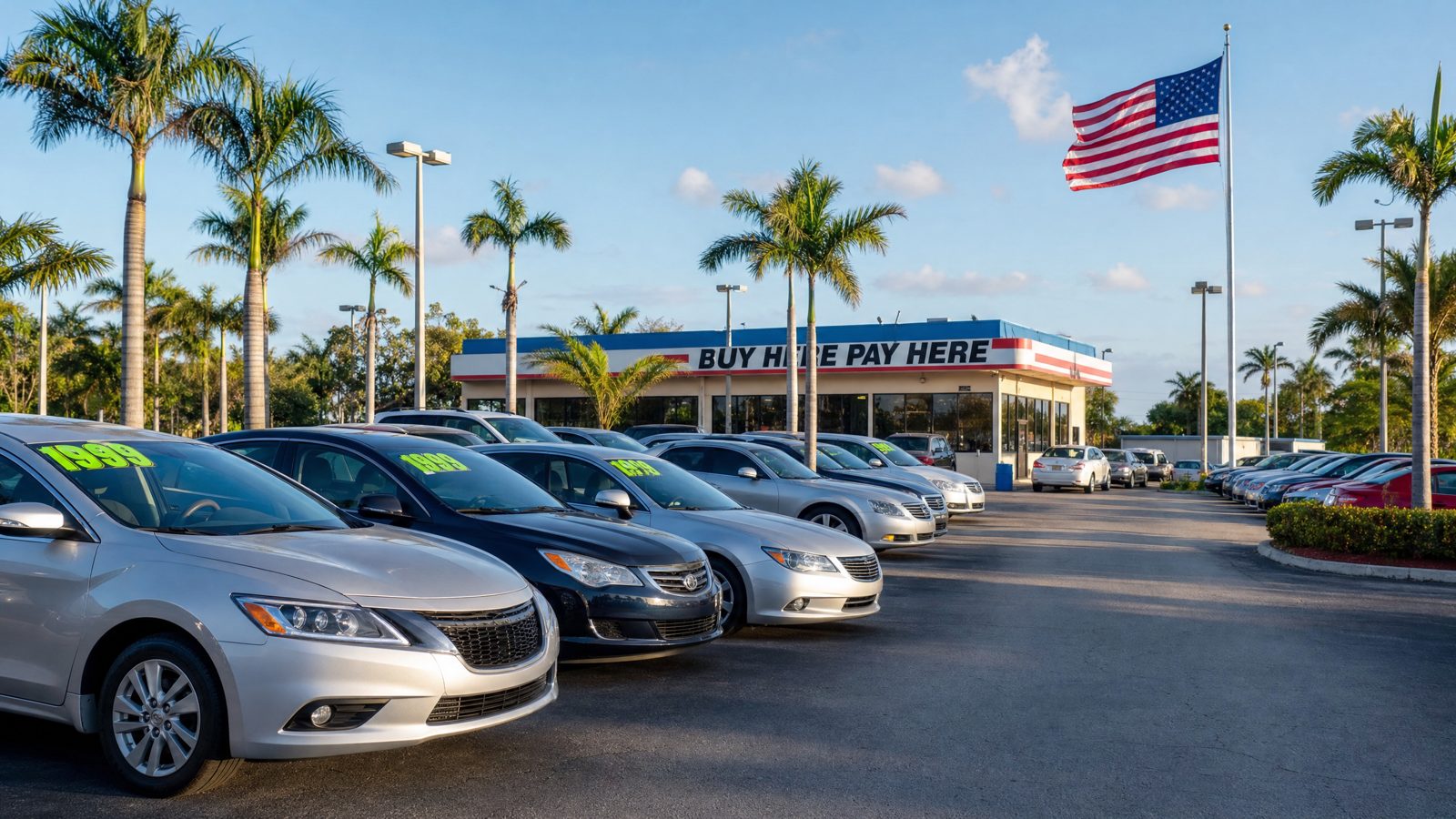
Buy Here Pay Here dealers have two connected assets: vehicles available for sale and receivables created after a legitimate financed sale. Protecting them requires more than treating every unpaid balance as a vehicle theft.
If a customer entered a genuine transaction and later stops making payments, that is not automatically a false-pretense claim. Nonpayment alone does not establish the deceptive vehicle transaction described by a false-pretense endorsement. Collection difficulties, a repossession shortfall, and a decline in collateral value are different from a fraudster inducing you to release inventory.
If identity or transaction fraud is suspected, preserve the evidence and report the facts promptly. Ask the insurer to evaluate the particular transaction rather than labeling all defaults as fraud. The timing of ownership transfer, your financial interest, and the wording of the applicable coverage need attention.
Your BHPH coverage review should distinguish inventory protection from the protection arranged for financed collateral and other lending exposures. Do not assume a false-pretense endorsement pays the full unpaid loan balance, repossession expense, lost interest, or every cost of unwinding a deal.
The same distinction applies outside BHPH. A retail lender’s approval can help complete a sale, but the dealership still needs a clear process for authenticating the buyer and satisfying delivery requirements. Written lender agreements can also allocate responsibilities that a general insurance summary does not explain.
If you finance your own customers, use our Buy Here Pay Here insurance guide for the broader coverage picture. In the false-pretense discussion, focus on the specific vehicle fraud exposure—not on turning an endorsement into a guarantee of loan performance.
What to do when you discover a suspicious loss
Act quickly, but do not let the urgency erase the evidence. Stop further deliveries or payments connected to the suspicious transaction while management reviews the facts. Preserve the original documents, emails, text messages, verification records, payment information, footage, and vehicle identifiers. Record the sequence of events while your staff can still explain what happened.
Report the suspected crime to the appropriate law-enforcement agency and obtain the report details. Contact your insurance professional and the carrier through the policy’s reporting channel. Describe the facts accurately: which vehicle was released or acquired, who handled the transaction, when the issue was discovered, and what financial loss is currently known.
If a payment is involved, contact your bank immediately about available protective steps. If a lender, floorplan provider, transport company, or rightful owner is affected, coordinate notification with management and legal counsel as appropriate. Do not promise a recovery, make unsupported accusations, or try to repossess a disputed vehicle without understanding the legal process.
For a misdirected wire or compromised account, preserve the original electronic records and notify the relevant response contacts promptly. A vehicle claim and a cyber or crime claim may require different reporting channels. Marsh’s automotive guidance illustrates why a fraudulent payment instruction belongs in a specific social-engineering review.[6]
Ask the insurer what additional evidence is needed and whether proposed settlement or recovery steps require consent. Keep one internal owner for communications so different employees do not give conflicting explanations or alter the transaction record.
After the immediate response, identify the failed control without assuming one employee caused the entire event. Was an exception undocumented? Did payment approval and vehicle release happen too close together? Was a supplier’s identity checked but the new beneficiary account left unverified? Update the process around the actual failure. Insurance helps with qualifying losses; a better process helps keep the next fraudulent deal from reaching the release desk.
Protect Your Inventory From Fraud Gaps
Get dealer insurance built around how you buy, finance, and release vehicles. Ellie Insurance Group's access to 100+ A-rated carriers helps us compare eligible dealer programs for competitive pricing and the inventory protection your business needs. Ask us to include false-pretense coverage in your review, not just a general theft limit.
False pretense insurance FAQs
Does dealers open lot insurance automatically include false-pretense coverage?
Do not assume it does. IRMI describes a false-pretense exclusion in garage physical-damage coverage and an endorsement that can address the exposure. Ask to see your actual form, schedule, and limits rather than relying on a general statement that theft is covered.[1]
Can false-pretense coverage apply when a test-drive vehicle never returns?
Does it cover a counterfeit cashier’s check?
A counterfeit instrument that induces release of a vehicle is an appropriate scenario to discuss under false-pretense wording. Separate refunded money or other financial losses need their own review. The FTC confirms that counterfeit checks can look legitimate and that available funds are not proof the check is good.[3]
Is buying a stolen vehicle the same as ordinary title paperwork trouble?
No. A deceptive acquisition from someone without legal title is different from a routine administrative delay or a legally disclosed branded title. Some false-pretense protection addresses acquisition without legal title; confirm the specific transaction and wording with your insurer.[1]
Does false-pretense insurance cover wire fraud?
Not as a blanket rule. A loss of money through fraudulent instructions should be reviewed under the applicable crime, social-engineering, funds-transfer, or cyber provisions. Do not equate a vehicle endorsement with comprehensive payment-fraud protection.[6]
How much false-pretense coverage should a used-car dealer carry?
Start with the value of the units exposed to fraudulent release or acquisition, then discuss multiple-vehicle loss scenarios. Compare the relevant sublimit, valuation, deductible, and any aggregate with your operation. There is no single amount that fits every dealership.
Is the lowest-price dealer policy the best choice?
Only when the protection also fits your business. Compare false-pretense wording and inventory protection alongside premium. A clearly explained coverage difference is more useful than a broad promise of “full coverage.” Request an instant dealer insurance quote that accounts for the way you buy and release vehicles.
Sources and references
Insurer and specialist guidance explains the fraud exposure; government sources support payment and title-verification information. These sources do not replace the terms of your issued policy.
- IRMI — False pretense, trick, and device
- Marsh McLennan Agency — False-pretense risks and dealership controls
- Federal Trade Commission — How to spot, avoid, and report fake check scams
- U.S. Department of Justice — NMVTIS vehicle-history information for consumers and dealers
- Sentry Insurance — Controlling false-pretense losses
- Marsh McLennan Agency — Automotive cybercrime and social engineering
- Victor Insurance — Dealer open lot inventory physical-damage program
Insurance and legal disclaimer:This guide is general education, not legal advice or a binder of insurance coverage. The issued policy, endorsements, exclusions, transaction facts, and applicable law govern a claim. Requirements may change; verify with your state agency and licensed insurance professional. All loss examples are hypothetical. Sources reviewed October 20, 2026.

Kevin A. Smith
Kevin specializes in commercial insurance for automotive businesses — dealers, repair shops, towing companies, and garages — across FL, TX, GA, NC, SC, OK, NM, and UT. He works with 100+ A-rated carriers to find the right coverage at the right price.
View all articles by Kevin