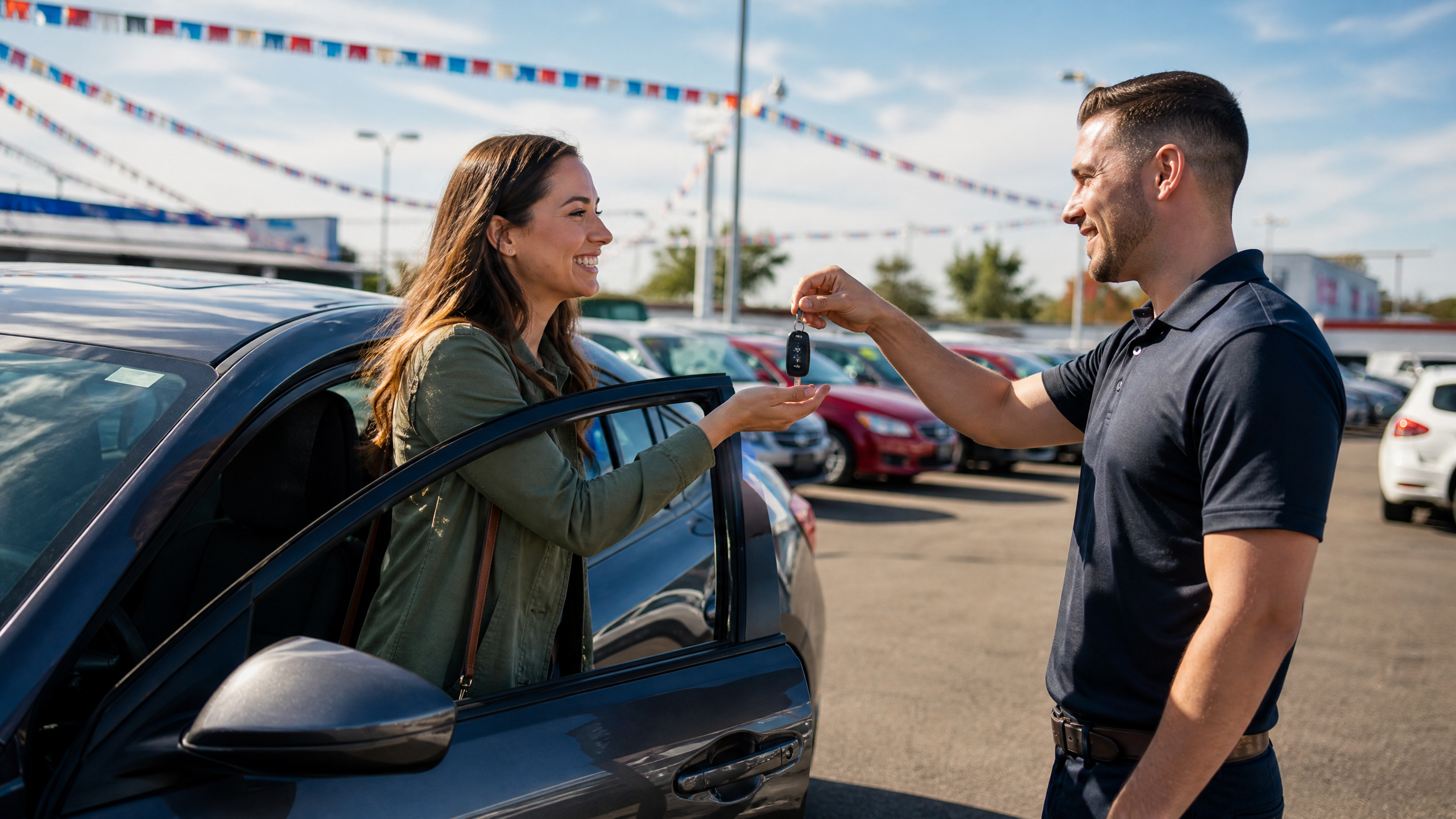
Test drives are central to auto retail, but allowing a prospective buyer to operate dealer-owned inventory creates liability and physical-damage exposures. A test-drive accident can be costly, and dealers should understand how the actual policies, driver, vehicle, and state law apply.
Many dealers operate under the assumption that if a customer crashes during a test drive, the customer's personal auto insurance will cover the entire loss. Others assume their garage liability policy provides a blanket shield against any test drive incident. The reality is far more complex. Insurance hierarchies, the presence of a salesperson in the vehicle, and the legal doctrine of negligent entrustment all dictate who ultimately pays for the damage and injuries resulting from a test drive crash.
The Insurance Hierarchy: Whose Policy Pays First?
When an accident occurs during a test drive, separate third-party liability from damage to the dealer's own vehicle. The coverage and payment order depend on the policies, covered-auto and driver provisions, applicable state law, and the facts of the loss. There is no nationwide primary-versus-excess formula.
The Permissive Use Doctrine
Giving a prospective buyer permission to drive does not prove that every insurer treats them as a covered driver. The dealer's and driver's policies may both matter, but covered-auto definitions, permissive-use terms, exclusions, limits, and state statutes vary. Ask your agent and insurer to verify the applicable policy language before adopting a test-drive policy.
Do not assume the test driver's personal policy pays first. A dealership's garage or covered-auto liability may apply to a permissive test driver; a customer's own insurance may apply differently depending on its terms and state law. Neither a customer's insurance card nor a signed agreement establishes the priority of coverage. For a practical review of solo demonstrations, see our unaccompanied test-drive insurance and controls guide.
The Role of Garage Liability and Dealers Open Lot Insurance
Dealers should review garage or covered-auto liability for injury or damage to others and dealers open lot (DOL) or inventory physical damage for covered damage to dealer-owned vehicles. These are different coverage questions, and whether a particular form or limit is required depends on the state, license, and policy.
The dealer's liability coverage is not automatically excess to the customer's personal insurance. Which policy responds first and for what loss requires a review of the applicable contracts and law. Inventory physical-damage coverage also has its own causes of loss, deductibles, and exclusions.
Understanding Subrogation
After paying a covered loss, an insurer may seek recovery from a responsible party through subrogation if the facts and law permit it. A reported loss may also affect future underwriting or pricing. Recovery and renewal outcomes are not automatic.
| Coverage Layer | What It Covers | When It Pays |
|---|---|---|
| Driver's Personal Auto | Some liability or non-owned-auto exposure if terms apply | Depends on that policy and state law; never assume it pays first |
| Dealer's Garage / Covered-Auto Liability | Covered third-party injury and property damage | Depends on covered autos, drivers, conditions and priority rules |
| Dealers Open Lot (DOL) | Covered physical damage to the dealer's own inventory | Subject to covered causes of loss, limits, deductibles and exclusions |
| Umbrella / Excess Liability | Potential additional liability protection | Only if its underlying and excess terms respond to this event |
The Salesperson Factor: Accompanied vs. Unaccompanied Test Drives
One of the most critical factors in determining a dealership's liability during a test drive is whether a salesperson was sitting in the passenger seat. The legal landscape shifts dramatically based on the presence of a dealership employee.
Accompanied Test Drive
A salesperson's presence may affect control and agency arguments under applicable state law. It does not automatically decide liability or insurance coverage.
Unaccompanied Test Drive
A customer driving alone can change control-related arguments, but negligent entrustment, vehicle condition, owner-liability rules, theft, and coverage gaps still matter.
Agency Theory and Joint Venture (Accompanied Drives)
In some jurisdictions, the employee's presence can support an agency, joint-purpose, or right-of-control argument. Other jurisdictions analyze the relationship differently. Neither the salesperson's seat nor a signed waiver settles a specific accident claim.
A salesperson may direct the route and observe the customer's driving, but the legal consequences vary by jurisdiction and the actual conduct. Talk with local counsel about your state's rules rather than treating a multistate case summary as a nationwide rule.
A claimant may sue both driver and dealer after a serious crash and allege that the dealer participated in, controlled, or negligently authorized the drive. Whether the dealer is actually responsible depends on state law, proof, and the particular accident facts.
The Bailment Relationship (Unaccompanied Drives)
The legal dynamic changes when a dealership allows a customer to take a vehicle on an unaccompanied test drive. When the customer drives off the lot alone, the transaction is typically viewed as a bailment — a legal relationship where physical possession of personal property is temporarily transferred from the owner (the dealership) to another party (the driver).
In a solo drive, no employee sits in the vehicle to direct the customer. That fact may weaken one control-based liability theory, but it is not an immunity rule. Negligent entrustment, a vehicle defect, owner-liability laws, and other facts can still matter. For release, theft, plate, and key controls, read our unaccompanied test-drive guide.
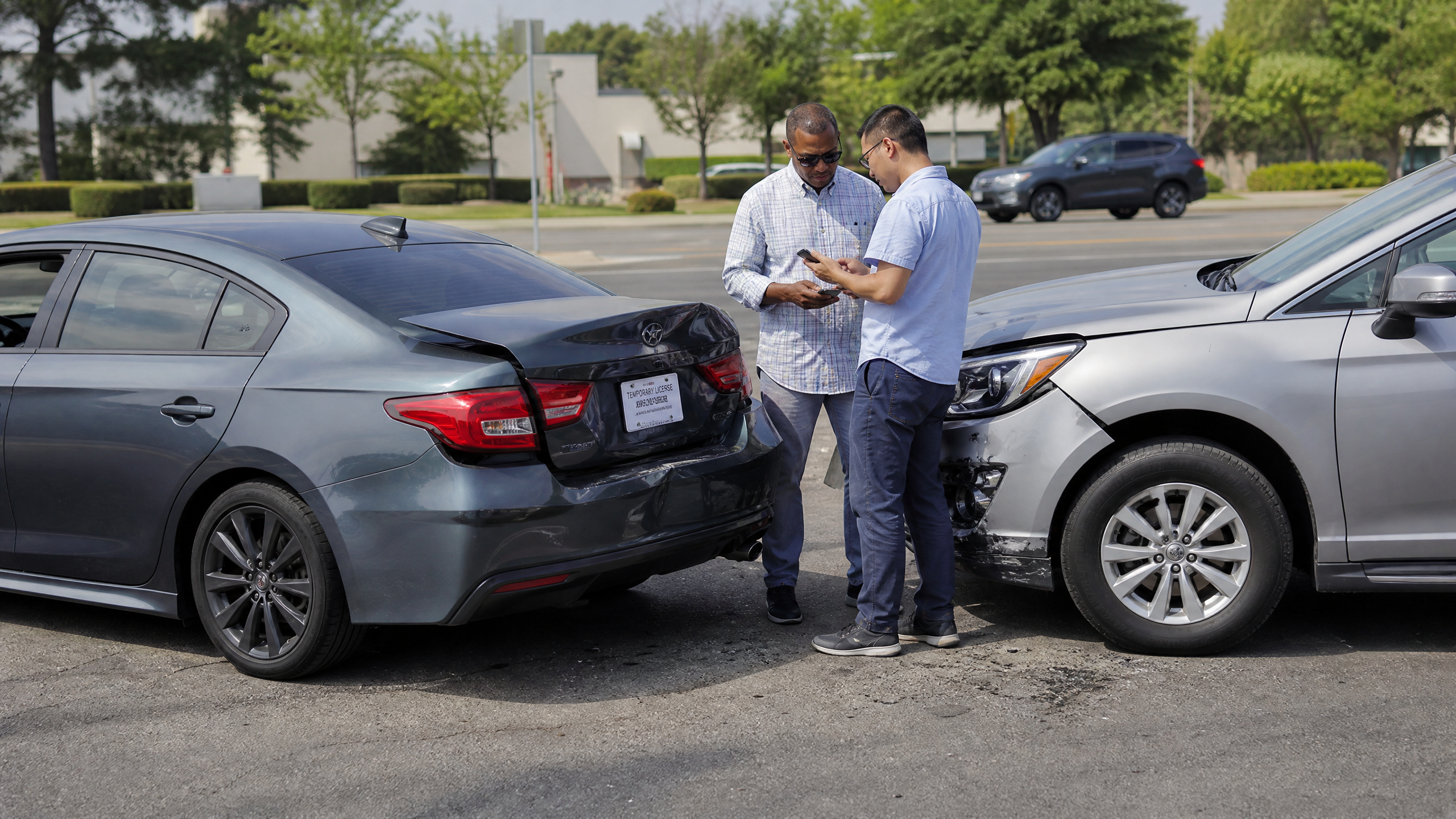
The Threat of Negligent Entrustment
Regardless of whether a salesperson is in the car, a dealership can be held directly liable for a test drive accident under the doctrine of negligent entrustment.
A negligent-entrustment claim can arise when an owner gives control of a vehicle to someone it knew or reasonably should have known was unfit to drive, depending on state law and the facts. Permission to drive is not a defense to the dealer's own negligent conduct; a finding of dealer liability is not automatic.
Common scenarios that trigger negligent entrustment claims against auto dealers include:
- Handing the keys to a customer who is visibly intoxicated or impaired by drugs
- Allowing a customer to test drive a vehicle without verifying they possess a valid driver's license
- Permitting an obviously inexperienced driver to test drive a high-performance sports car or heavy-duty truck
- Ignoring a customer who appears drowsy, agitated, or otherwise unfit to operate a vehicle
There is no universal requirement to run a motor vehicle report on every prospective buyer. Checking a license and responding to observable signs of impairment are sensible controls; your insurer or state may impose additional rules. Whether a particular allegation is covered, defended, or affects renewal depends on the policy and facts.
Liability Waivers: Do They Actually Protect the Dealership?
A dealership can document the approved driver, vehicle, return time, permitted route, and incident reporting obligations in a test-drive agreement. Whether a separate waiver or indemnity provision is appropriate and enforceable requires state-specific legal review.
While these waivers are a standard industry practice, dealers must understand their limitations. A liability waiver is not a bulletproof shield against lawsuits.
| Waiver Limitation | What This Means for Dealers |
|---|---|
| Cannot override state insurance laws | A customer agreement cannot decide which insurer pays first contrary to the policies and applicable law or bind an injured third party who did not sign it. |
| Unclear terms may be contested | Ambiguous or hidden language can be challenged. Have an attorney review the agreement and present it clearly to customers. |
| Does not erase vehicle-condition claims | Claims involving unsafe tires, faulty brakes, or other dealer conduct can still arise; enforceability depends on the state and actual agreement. |
| Must be clear and conspicuous | Overly broad, confusing, or hidden waiver language can be struck down by a court. Must be drafted by an attorney familiar with your state's laws. |
Waivers are a necessary component of risk management — they clearly establish the expectations between the dealer and the buyer. However, they should never be viewed as a substitute for robust garage liability insurance with adequate limits.
Not Sure If Your Policy Covers Test Drives?
We can review the policy terms that affect accompanied and solo demonstrations, inventory physical damage, and possible exclusions. Actual coverage depends on the insurer and policy.
6 Best Practices for Managing Test Drive Risk
Insurance can help address covered losses, but documented procedures can reduce preventable risk. Follow the rules your carrier approves and maintain a record of each authorized drive.
Those procedures should also address who controls each dealer tag, which VIN displays it, and when it must be returned. See our dealer plate insurance guide for state rules and an eight-step plate-control system.
1. Verify & Document Driver Credentials
Never allow a vehicle to leave the lot without physically inspecting the driver's license. Ensure it is valid, unexpired, and belongs to the person in front of you. Make a photocopy or digital scan and keep it on file with the signed test drive agreement.
2. Assess Driver Competence
Train sales staff to perform a basic visual assessment. If a customer appears intoxicated, smells of alcohol or marijuana, or seems unusually agitated or drowsy, refuse the test drive. Document the refusal and the reason.
3. Establish a Fixed Test Drive Route
Create a predetermined route with right-hand turns whenever possible (to avoid crossing oncoming traffic), avoiding high-traffic intersections, and including a brief highway stretch if needed.
4. Strict Unaccompanied Drive Policy
If approved by your insurer, establish a reasonable return time, route, authorized drivers, and key/plate log. Use location technology only in compliance with applicable notice and privacy rules. See our solo-drive checklist.
5. Maintain Vehicles Meticulously
Every vehicle must undergo a safety inspection before being made available for test drives. Document all maintenance. Immediately ground any vehicle with an open safety recall.
6. Review Your Policy Annually
Sit down with an independent agent who specializes in automotive risks. Confirm your policy has no exclusions for unaccompanied test drives and that your limits can handle a catastrophic injury claim.
The Cost of Inadequate Coverage
A serious test-drive crash can create liability beyond a dealer's chosen limits. Review your coverage and procedures before an incident rather than treating a low-cost policy or signed agreement as complete protection.
Consider this scenario: A prospective buyer takes a $28,000 SUV on an unaccompanied test drive. They run a red light and T-bone a minivan carrying a family of four. Two passengers suffer serious injuries requiring surgery and extended rehabilitation. The total claim exceeds $500,000.
That hypothetical third-party claim could involve the driver's auto liability, the dealer's garage or covered-auto liability, and perhaps excess liability — but no fixed allocation can be calculated from these facts alone. The dealer's SUV is a separate physical-damage question. State law, policy forms, exclusions, and actual limits determine the result.
Ask your agent to compare the required state licensing minimum with the higher limits, deductibles, and excess options appropriate for your inventory, road use, contracts, and risk tolerance. Quotes and protection vary by insurer and account; no limit guarantees that every claim will be paid in full.
Relying solely on the customer's personal auto insurance is a gamble that dealerships cannot afford to take. By understanding the permissive use doctrine, the implications of accompanied versus unaccompanied drives, and the necessity of adequate garage liability limits, dealers can protect their inventory, their assets, and their livelihood.
Frequently Asked Questions
Who pays if a customer crashes during a test drive?
Does my garage liability policy automatically cover test drives?
Am I liable if a salesperson is in the car during the accident?
Do I need to verify the customer's insurance before a test drive?
Will a test drive accident increase my insurance premiums?
Should I allow unaccompanied test drives?
Sources for coverage and legal context: Alliant dealer insurance guidance; Progressive on test-drive insurance; Jaburg Wilk's jurisdiction-specific legal analysis; IRMI false-pretense definition. Industry guidance is not the controlling policy or state law.
Disclaimer: This article is educational and does not constitute legal or insurance advice. Coverage terms, liability laws, dealer-plate rules, and insurance requirements vary by state and may change. This article does not determine which policy is primary or guarantee that an accident or theft is covered. Consult a licensed insurance agent and local counsel about actual forms and state requirements. Reviewed October 2026. DealerLiability.com is operated by Ellie Insurance Group and is not a law firm.

Kevin A. Smith
Kevin specializes in commercial insurance for automotive businesses — dealers, repair shops, towing companies, and garages — across FL, TX, GA, NC, SC, OK, NM, and UT. He works with 100+ A-rated carriers to find the right coverage at the right price.
View all articles by Kevin