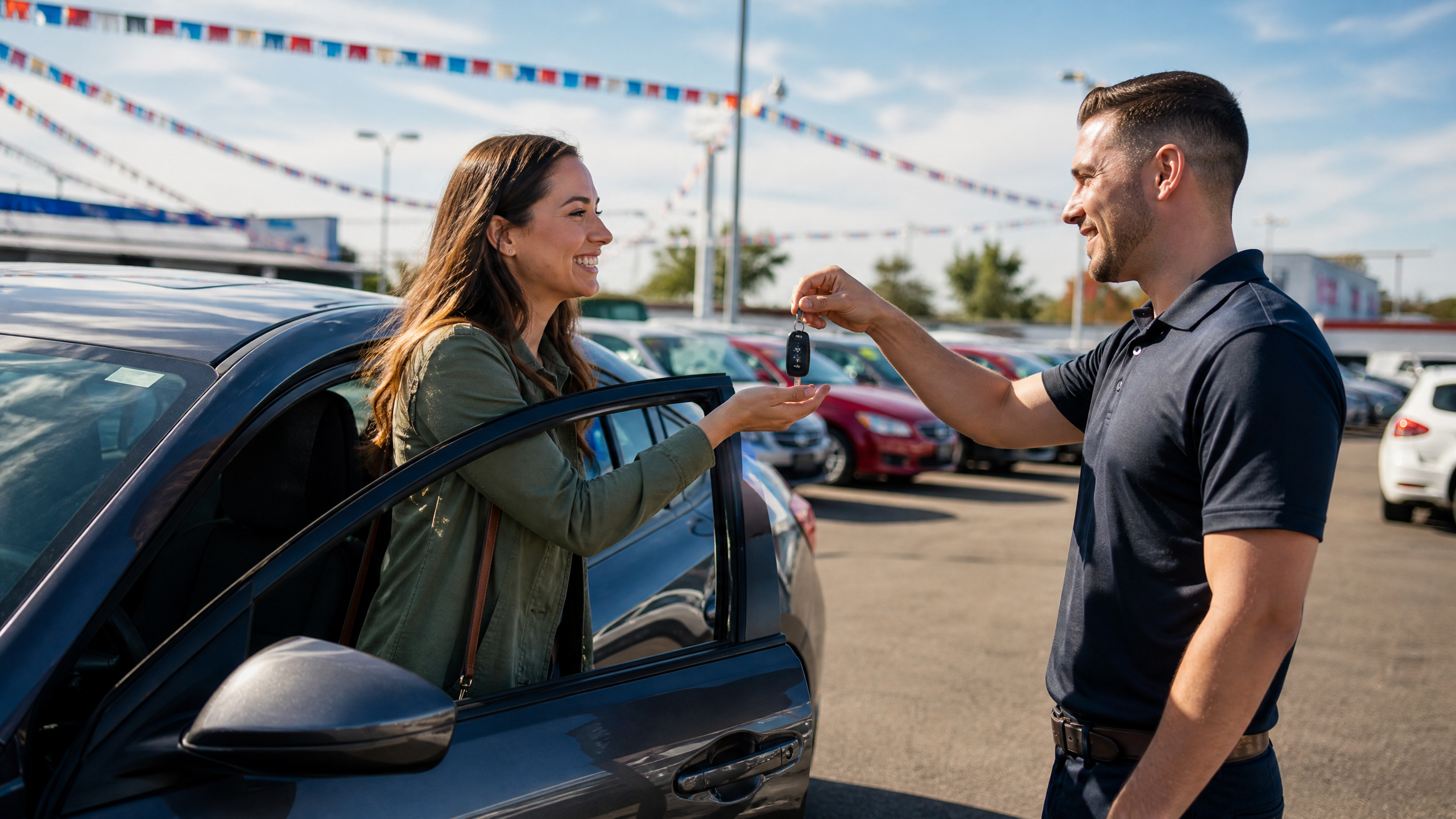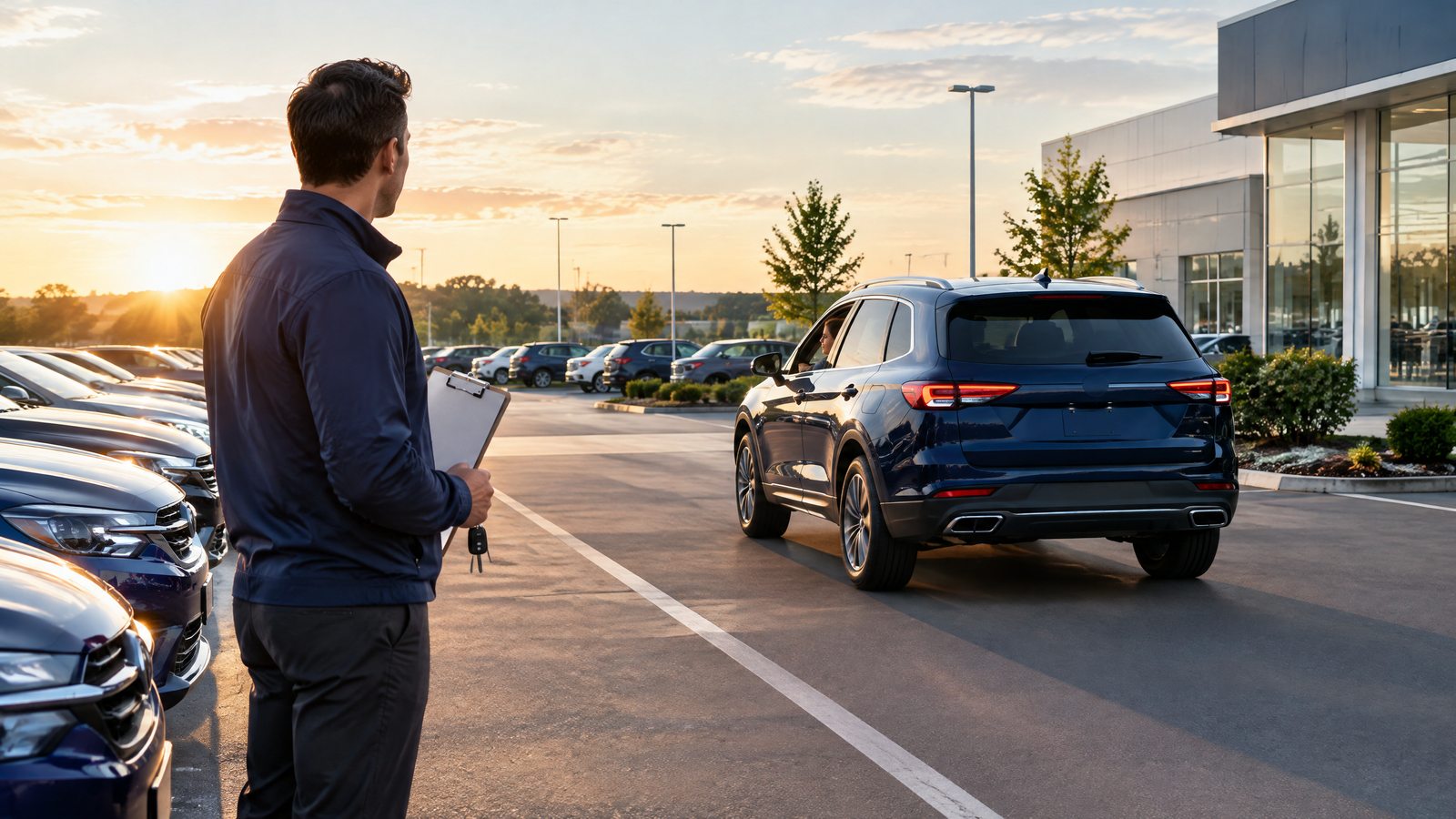
A customer asks for the keys and wants to test-drive a dealer-owned vehicle alone. Can you say yes? Often you can, but permission to drive, a plate or demonstration permit, and insurance coverage are separate questions. Before an unaccompanied test drive, confirm the vehicle and driver are eligible under state rules, ask your insurer how the policy treats solo demonstrations, and use a documented release-and-return process. A solo drive is not an automatic transfer of all liability to the customer.
Should your dealership allow an unaccompanied test drive?
There is no one-size-fits-all answer. A short, documented solo drive for a verified, licensed buyer may fit a dealership's sales process. But a salesperson in the passenger seat can explain the car and observe how it is driven; without that person, the dealer gives up immediate supervision. Marsh and Utica National recommend accompaniment when practical, with formal procedures if the customer drives alone.[1][2]
Nor does sending the buyer out alone make the dealer immune from a third-party claim. Responsibility can depend on state owner-liability and negligent-entrustment law, what the dealership knew about the driver, the condition of the vehicle, and what actually caused the crash. A legal analysis distinguishes accompanied from unaccompanied drives in some jurisdictions but expressly warns that the law is not uniform.[3] For the broader accident-liability discussion, see our dealer test-drive liability guide. This article focuses on the solo-drive decision and controls.
Which insurance applies if an unaccompanied customer crashes?
Ask about three different losses: injury or property damage to others; physical damage to your inventory vehicle; and a vehicle obtained through deception and not returned. No one policy label answers all three. An industry dealer-insurance guide notes that test-drive coverage depends on the policy, vehicle, driver, dealer procedures, and exclusions. A consumer insurer also explains that dealership insurance often supports prospective test drivers; whether a customer's own policy applies or pays first is not a universal rule.[4][5]
| Loss to ask about | Coverage to review with your agent | Do not assume |
|---|---|---|
| Crash injures someone or damages another vehicle | Dealer garage/covered-auto liability; the driver's applicable auto policy; limits, covered drivers, and any priority-of-coverage rule. | That the customer's personal policy is always primary, or that a signed waiver eliminates the dealer's exposure. |
| Dealer's test-drive vehicle is damaged | Dealers open lot or other inventory physical-damage coverage; causes of loss, location/use restrictions, deductible, and valuation. | That liability insurance repairs dealer-owned inventory, or that the customer's policy necessarily pays for it. |
| Customer takes the vehicle and does not return it | Inventory physical damage plus any false-pretense coverage or endorsement; theft, fraud, voluntary-parting wording, reporting requirements. | That an ordinary theft limit automatically covers a vehicle you voluntarily handed over. |
Get carrier-specific answers in writing for unaccompanied drives, permitted drivers, employee verification steps, route/time boundaries, dealer plates, higher-value units, and overnight demonstrations. Ask whether the dealer's deductible, driver exclusions, a garage policy condition, or a separate endorsement changes the result. The policy and applicable law decide a claim, not a blog post or the customer's insurance card.
If the customer never returns, is it covered as theft?
Do not count on it. IRMI uses the exact example of a supposed customer absconding with an automobile under the pretense of a test drive when explaining a false-pretense, trick, and device exclusion found in garage physical-damage forms. IRMI says an appropriate endorsement can address that gap, but the actual language and availability must be checked. Marsh McLennan Agency likewise urges dealers to review false-pretense protection rather than assuming any theft incident is insured.[6][7]
A locked vehicle taken from a lot, a driver who legitimately receives keys and then fails to return, and a fraudulent purchaser who obtains title under a false identity are not necessarily the same coverage event. Whether a particular non-return is theft, fraud, or a contract dispute is a fact-specific legal and claims determination. Dealers open lot coverage protects specified inventory risks, but ask specifically whether your form excludes voluntary parting or false pretense and whether a suitable endorsement is available.
Dealer plates and customer demonstration paperwork vary by state
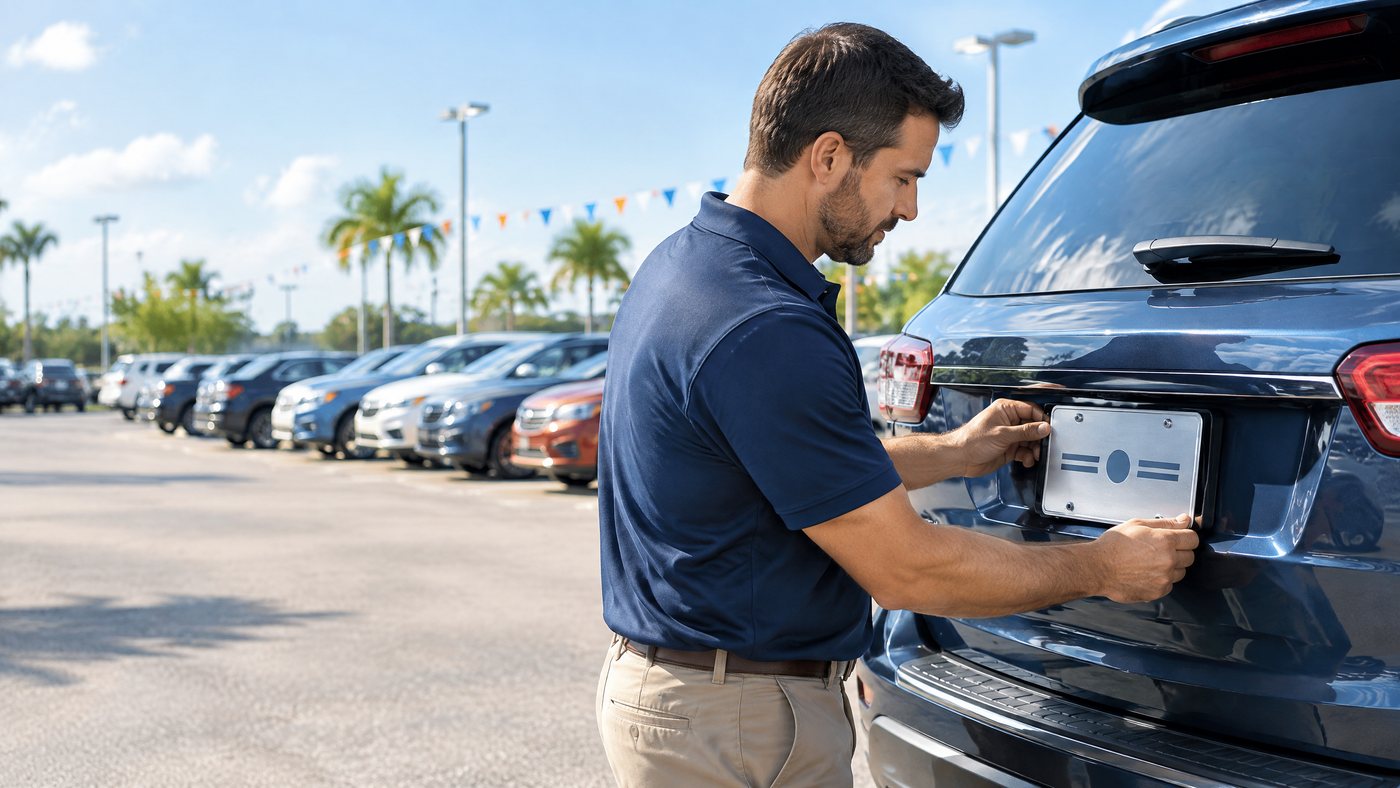
The fact that a customer is licensed does not alone establish lawful dealer-plate use. Match the vehicle, plate, driver, permit, and permitted use to the state where the drive occurs. These examples describe dealer-related rules, not personal-auto minimums and not blanket permission for extended solo drives:
- Florida: Fla. Stat. § 320.13(1)(a) allows qualifying dealer plates on dealer-owned inventory for sale or use connected with the dealer's business, but not for hire. Its often-quoted 24-hour demonstration limit applies specifically to heavy-truck dealers under subsection (1)(c); do not apply it indiscriminately to ordinary used-car lots.[8]
- Texas: TxDMV lists demonstration and test drives as standard dealer-plate uses on eligible inventory. Its plate log records the plate number, vehicle year/make and VIN, and person in control. Confirm the current plate class and vehicle eligibility before release.[9]
- North Carolina: G.S. § 20-79(d) requires a qualifying customer driving dealer-plated inventory to carry a demonstration permit; the permit identifies approved licensed drivers and vehicle and can last up to 96 hours, renewable once for good cause. That legal maximum is not a recommendation to offer four-day unsupervised drives.[10]
- South Carolina: SCDMV requires a completed MV-38 demonstration certificate or equivalent when a customer drives a vehicle with dealer plates. It limits customer use to seven days, which is a state allowance rather than a recommended test-drive duration.[11]
Other states have different rules. Read the controlling agency guidance for your plate type and dealer license, and consult our dealer plate insurance and controls guide for more detail. Insurance approval and compliance with a dealer-plate rule must both be established; one does not prove the other.
A release-and-return checklist for solo demonstrations
Use one written procedure, train staff to apply it consistently, and have your insurer review it. These are risk-control recommendations, not a universal legal checklist; Marsh, Utica National, and TXIADA all recommend verifying the driver and documenting the drive.[1][2][12]
- Authorize the customer and the vehicle. Check the current license against the person presenting it and the class of vehicle. Confirm that the vehicle is in eligible inventory, is roadworthy, and carries the permitted plate or registration. Resolve questionable ID, apparent impairment, an outstanding safety issue, or a disallowed driver before any keys leave the desk.
- Confirm the policy and demonstration terms. Follow your insurer-approved eligibility rules; request proof of personal insurance if your dealership's policy calls for it, but do not mistake a card for proof that the customer's policy will pay first. Specify the approved driver(s), vehicle/VIN, purpose, route or area, departure and return time, and who to call if delayed.
- Complete the right paperwork. Use a plain-language, attorney-reviewed agreement for permission, return time, permitted users, and incident reporting. Issue any state-required demonstration permit or certificate. A customer signature documents terms but does not waive a third party's rights or override insurance law.
- Record release without oversharing customer data. Log employee, date/time, VIN, plate number, person in control, and planned return time. Keep any license copy or identifying information access-controlled and subject to a retention policy. Dealers that finance or arrange consumer financing may have additional duties for qualifying customer information under the FTC Safeguards Rule; a stand-alone test-drive record is not automatically covered by that federal rule.[13]
- Bound the trip. Prefer a short preapproved route and reasonable return deadline. Avoid informal overnight or open-ended permission. If using a lawful, disclosed vehicle-location tool, verify it works, limit access to authorized staff, and follow applicable privacy and consent rules.
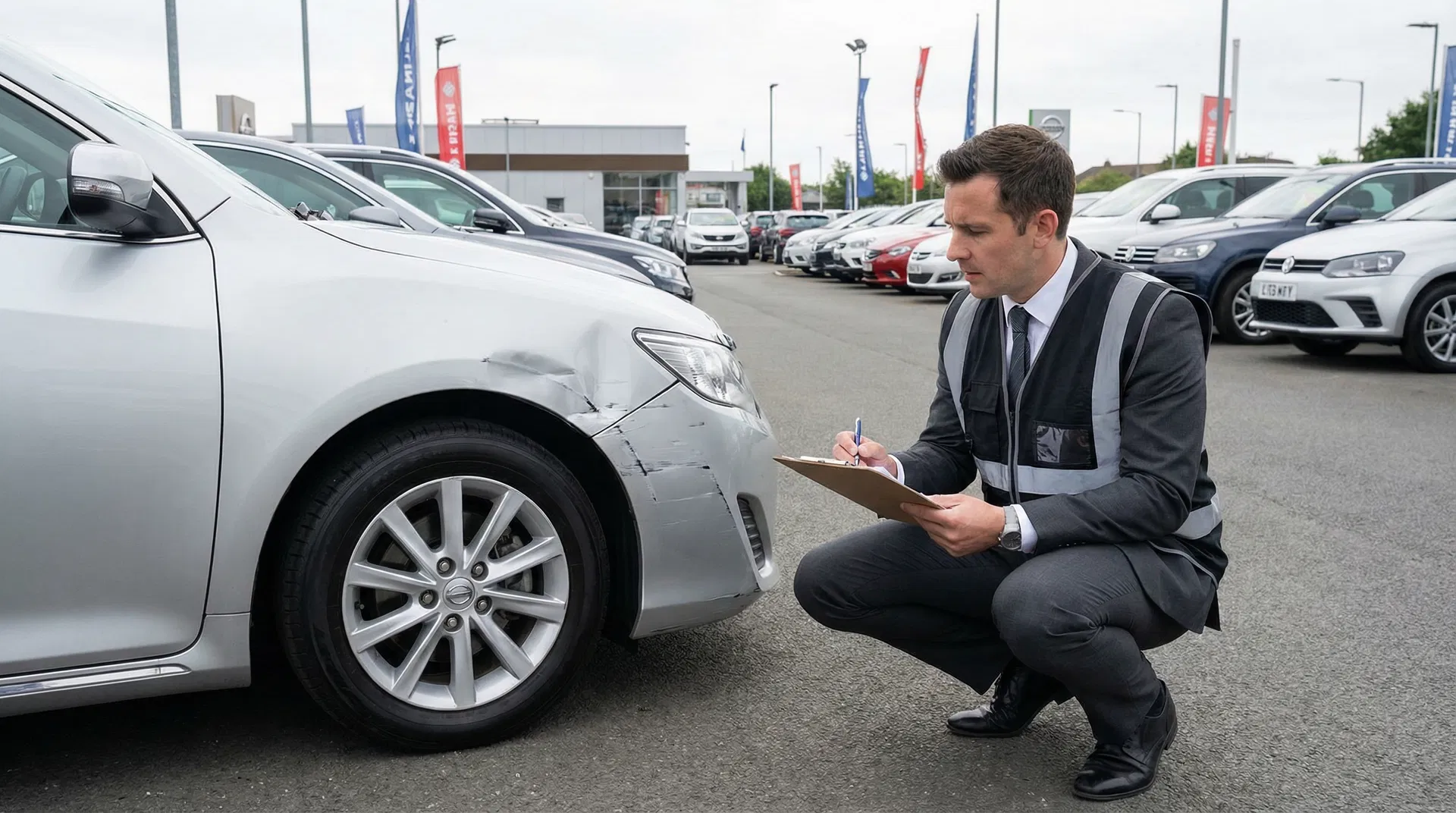
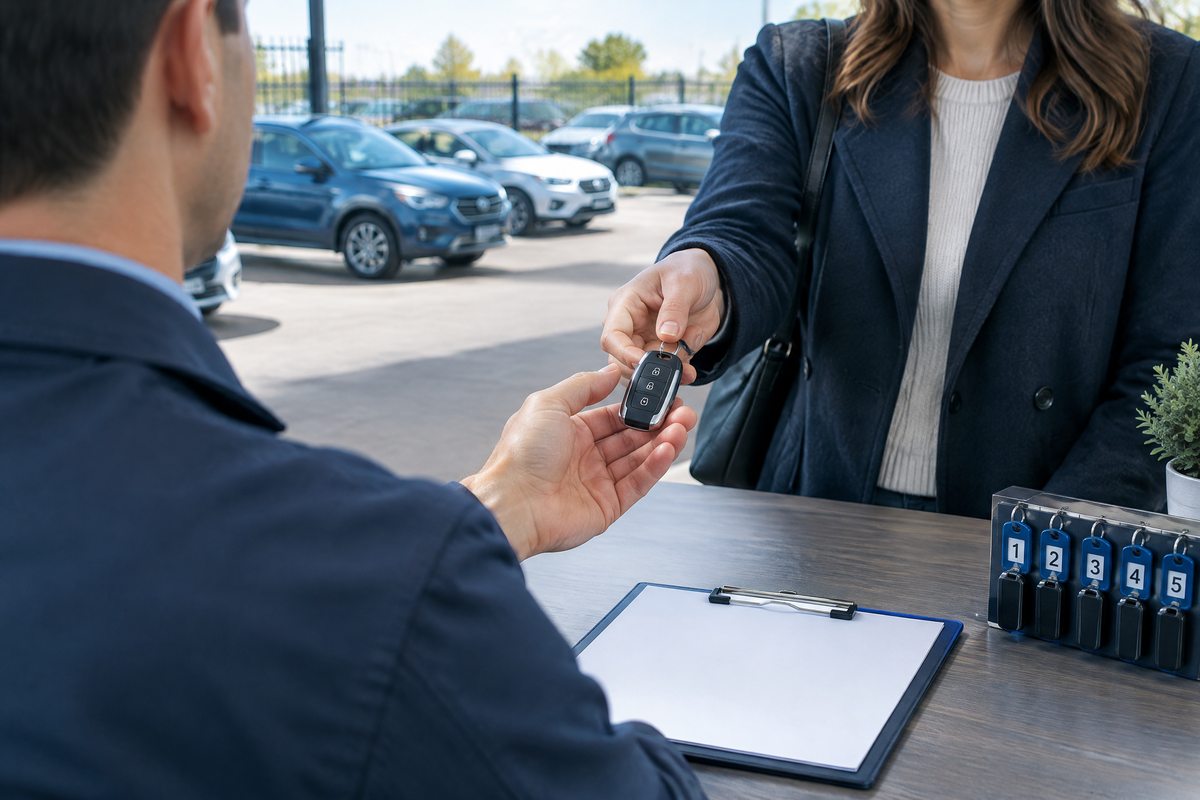
- Check the vehicle back in. Record return time and mileage, inspect for damage, retrieve the key and any dealer plate, and confirm the returned key actually locks the vehicle. Reconcile the plate log and close the drive record before the next customer. Marsh specifically calls out this key-control step because a swapped key can lead to a later loss.[1]
- Escalate a missed deadline. Use a named staff owner, a prompt contact attempt, and a documented escalation threshold. Do not leave an overdue vehicle as an open calendar entry or assume it cannot be reported until a universal waiting period passes.
What if the vehicle is overdue, missing, or involved in a crash?
Start with the written return time. Contact the approved driver using the details on the agreement, alert the dealership manager, and preserve the release form, ID-verification record, plate/VIN log, key record, messages, and any lawful location or camera information. If theft or fraud is suspected, contact local law enforcement promptly and follow its reporting instructions; practices and legal thresholds vary. Notify your insurance agent or carrier promptly under the policy's notice provisions, and ask about both third-party liability and inventory physical-damage reporting. Do not try to chase or confront the driver.
If there is a crash, prioritize emergency services and accurate incident documentation. Avoid saying that the dealer or customer is automatically responsible, or that a waiver settles the claim. A non-returned vehicle may raise a false-pretense issue even when the plate was lawfully issued; a crash may involve more than one policy. Preserve the facts and allow the carrier and counsel to evaluate them.
Does Your Dealer Policy Permit Solo Test Drives?
Ellie Insurance Group can review your covered drivers, dealer-plate practices, inventory physical damage, and possible false-pretense gap with available markets. Eligibility and coverage depend on the actual insurer and forms.
Unaccompanied test-drive FAQs
Can a customer test-drive a dealer car alone?
Does a solo test drive eliminate dealership liability?
Whose insurance pays if the customer crashes?
Is a car stolen on a test drive covered by dealers open lot?
Should a dealer require a signed test-drive agreement?
Sources and further reading
- Marsh Risk Advisory, Test Drive Controls — risk-control guidance (not US statute).
- Utica National, Safety & Risk Management During Test Drives (2026).
- Jaburg Wilk, dealership liability during test drives (2017; jurisdiction-specific legal analysis).
- Alliant, Auto Dealers Insurance (test-drive coverage FAQ).
- Progressive, Car Insurance for Test Drives (updated 2026).
- IRMI, False Pretense, Trick, and Device (insurance definition and example).
- Marsh McLennan Agency, False Pretense Coverage (2024).
- 2026 Florida Statutes § 320.13(1)(a), (c).
- Texas Department of Motor Vehicles, Dealer License Plates.
- North Carolina General Statutes § 20-79(d).
- South Carolina DMV, Dealer License Plates.
- Texas Independent Automobile Dealers Association, Test Drive Procedures.
- Federal Trade Commission, Auto Dealers and the Safeguards Rule: FAQs.
Disclaimer: Educational information only; not legal advice, a binding quote, or a coverage determination. State plate/permit requirements, privacy rules, and insurance terms may change. Verify current rules with the applicable motor-vehicle agency and have your attorney and licensed insurance agent review your specific demonstration procedure, policy, underwriting company, covered autos/drivers, exclusions, limits, and endorsements. A signed test-drive agreement cannot create coverage or prevent a third party from making a claim. Reviewed October 2026. DealerLiability.com is operated by Ellie Insurance Group.

Kevin A. Smith
Kevin specializes in commercial insurance for automotive businesses — dealers, repair shops, towing companies, and garages — across FL, TX, GA, NC, SC, OK, NM, and UT. He works with 100+ A-rated carriers to find the right coverage at the right price.
View all articles by Kevin